How to Choose a Tattoo Artist for a Cover-Up
Updated
The Ombra Tattoo team · Written by the Ombra product team — practical guidance for planning tattoo ideas, placement, and cover-up questions.
Choosing a tattoo artist for a cover-up comes down to one thing a general portfolio can't show you: proof they have hidden old ink before. Look for healed cover-up photos — not fresh-off-the-needle shots — where you can see what was underneath, and where the old design isn't showing through months later. Then book a consultation and listen to how they talk about your specific tattoo: a specialist will tell you what they'd have to change about your idea and may tell you to fade it first or wait, while someone out of their depth will simply agree to whatever you ask for. Price should be the last thing you compare, because a cover-up that fails has to be covered again.
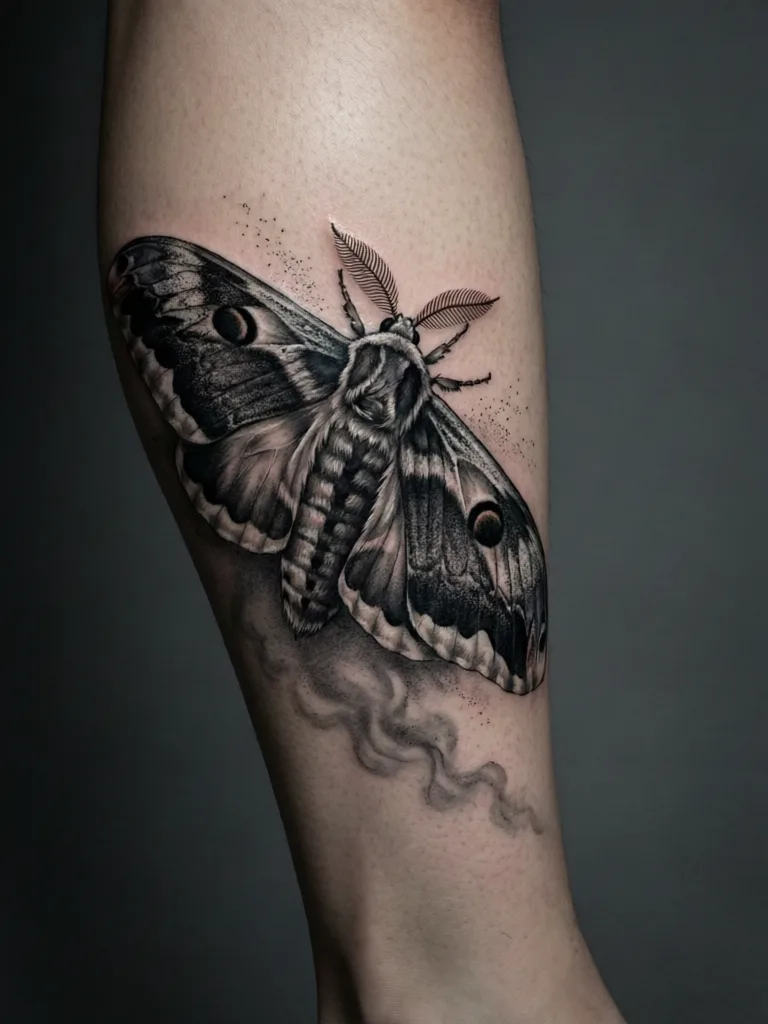
Any competent tattooer can put a good design on clean skin. A cover-up is a different job: the artist has to design backwards from a problem they didn't create, working out what shape, density and palette will swallow the tattoo that's already there — and then commit to it permanently, on skin that has already been tattooed once. Plenty of good artists don't take that work, and some who do aren't especially good at it. The whole task of choosing is separating those two groups, and it is mostly done before you ever sit in the chair.
Why a cover-up needs a different kind of artist
The new design has to be darker and denser than what's underneath, it has to route its heavy elements over the darkest parts of the old piece, and it has to hold up as it ages — because ink that looks buried on day one can begin to show again as the new tattoo settles and softens over years. That means the artist is making judgment calls you can't verify yourself: where to place a solid black anchor, how much filler the design needs, whether your idea is even possible at the size you want. Experience is the only thing that makes those calls reliable, and experience specifically with cover-ups is what you are shopping for.
What a cover-up portfolio has to show
Most tattoo portfolios are optimized to look beautiful, which is not the same as being informative. When you're hiring for a cover-up, you're reading for evidence, and there are only a few things that count as evidence:
- Actual cover-ups, labeled as such. If you can't tell which pieces were cover-ups, you can't tell whether they've done any. Specialists usually say so explicitly, because it's their selling point.
- The old tattoo visible in a before shot. A cover-up photographed only after the fact tells you nothing about the difficulty — the interesting question is always what was underneath.
- Healed photos, not just fresh ones. Fresh ink is at its darkest and most flattering. Healed work, weeks or months later, is where ghosting and patchy coverage show up.
- Work over dark, solid originals — not just faded ones. Covering a soft, grey old piece is a much easier job than burying a fresh blackout band, and a portfolio of easy cases doesn't prove much about a hard one.
- Range in style. If every cover-up in the book is the same dark rose in the same spot, you're looking at one solution, not a problem-solver.
- Something near your own case. Your placement, roughly your size, roughly your level of difficulty. This matters more than whether you love their general aesthetic.
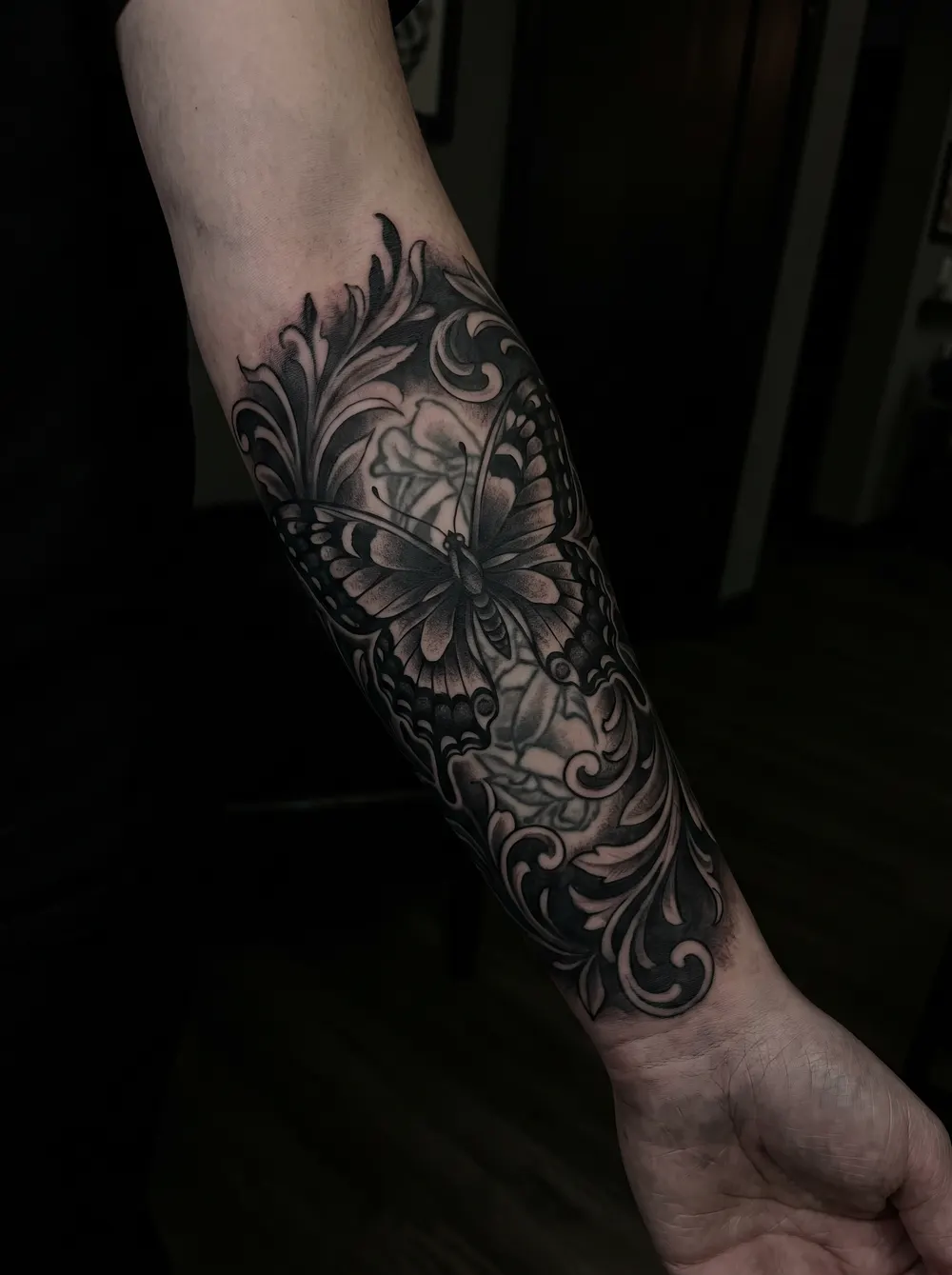
How to choose a tattoo artist for a cover-up, step by step
Photograph your tattoo honestly before you contact anyone
Take a clear photo in bright, even daylight, straight on, with nothing flattering about the angle. Artists screen inquiries from these photos, and a dim or cropped shot mostly gets you a vague reply. Note how dark it is, how sharp the lines still are, and how big it is compared to the area around it — you'll be asked all three.
Build a shortlist of people who advertise cover-up work
Search for cover-up specialists in your area rather than for tattoo artists generally, and look at studio pages as well as individual ones — most shops know which of their artists takes this work. Aim for three or four names, not one. A shortlist is what lets you compare the answers you get, and it stops a single confident 'no problem' from being the only opinion you hear.
Read each portfolio for evidence, using the list above
Go looking for healed cover-ups over dark originals with the old tattoo visible. If a portfolio has none of that, it isn't a portfolio of cover-up work, however good the tattoos are. Save the two or three specific pieces closest to your own case — you'll want to point at them later.
Send a real inquiry and read the reply, not just the price
Include the daylight photo, the placement, a rough size, and what you'd like instead — plus a note that it's a cover-up. What comes back is the most useful signal you'll get for free. A specialist asks follow-up questions: how old is it, has it been tattooed over already, how attached are you to that specific design. A one-line quote with no questions is an answer about their booking system, not about your tattoo.
Book a consultation and let them push back on your idea
The consultation is the real interview, and the thing you're listening for is disagreement. Expect to hear that the design needs to be bigger, darker or differently shaped than you pictured, or that a particular part of the old tattoo is the difficult bit. You may hear that you should laser-fade it first, or wait until it has settled further, or that they aren't the right person for it. All of those are good signs. Ask directly: what will you do about the darkest part, how much of the old shape constrains the new one, and what does this look like in five years?
Compare the shortlist on plan and honesty, then on price
Put the answers side by side. Prefer the artist whose plan you understand and whose limits they stated themselves, over the one who agreed to everything or quoted lowest. A cover-up you have to cover again costs more than the difference between any two quotes — and the second cover-up is a harder job than the first, because there is now more ink to hide.
Red flags worth walking away from
- No healed photos anywhere, only fresh work. The gap between the two is exactly where cover-up failures live.
- Promises that the old tattoo will be completely invisible, with no conditions attached. Coverage depends on your ink, your skin and the design — certainty offered before seeing it in person is a sales pitch.
- Agreeing to a design that's clearly smaller or lighter than the original without explaining how it will work. That's the most common way a cover-up ends up needing a second one.
- Pressure to book or pay immediately, or a quote that undercuts everyone else dramatically. Cover-ups take longer than equivalent fresh work, so a suspiciously low price usually means a suspiciously fast plan.
- Won't discuss the possibility of fading first, or dismisses it outright. It isn't always the right call, but it should be on the table for dark originals.
- No hygiene basics you can see, or evasiveness about licensing and the studio's practices. This applies to any tattoo, and none of the rest matters without it.
What to do before the consultation
One thing is worth settling before you walk in, because it changes the whole conversation: what a dark, dense design over your own tattoo actually looks like. People who haven't pictured it tend to spend the consultation arguing for a delicate fine-line piece the old ink was never going to allow. Arriving with a rough sense of the weight involved skips that argument entirely and gets you to the useful question — of the designs heavy enough to cover it, which one would you want to live with?
FAQ
How do I know if a tattoo artist is good at cover-ups?
Healed cover-up photos where the old tattoo is visible in a before shot. That one thing tells you more than the rest of a portfolio combined — fresh work is always at its most flattering, and coverage problems only appear as the new tattoo settles.
Should I choose a cover-up specialist or just a good tattoo artist?
A specialist, when you can. Covering old ink is a different skill from tattooing clean skin — it's a density and placement problem as much as a drawing one — and plenty of excellent artists simply don't do much of it. If your shortlist is a great artist with no cover-up work versus a decent one with lots of it, ask both and compare how they talk about your tattoo.
Is it rude to ask a tattoo artist for healed photos or references?
No, and a professional will expect it. You're commissioning something permanent on skin that has already been tattooed once. Asking what their cover-ups look like a year later is a normal question, and reluctance to answer it is itself informative.
What if the artist says my cover-up idea won't work?
Take it seriously — it's usually the most valuable thing you'll hear. Ask what would work instead: bigger, darker, a different shape, a different placement, or fading the old tattoo first. Then get a second opinion from someone else on your shortlist. If two specialists independently say the same thing, that's your answer.
How many tattoo artists should I ask before booking a cover-up?
Three or four is a good target. One opinion isn't comparable to anything, and a single confident "no problem" is the easiest thing in this process to mistake for expertise. Asking several also surfaces disagreement — if two specialists independently raise the same concern about your tattoo, that concern is real.
Related guides
Ombra Tattoo
Preview ink on your own skin