Do Cover-Up Tattoos Show the Old One?
Updated
The Ombra Tattoo team · Written by the Ombra product team — practical guidance for planning tattoo ideas, placement, and cover-up questions.
A well-planned cover-up aims to control how the old tattoo reads, but no preview or universal rule can promise that every trace will disappear. Show-through depends on the old value map, saturation, size, placement, skin, texture, the new composition, and whether fading is appropriate. If a proposed direction looks too light or too small for the actual starting map, pause before booking and ask the artist to redraw, extend, or discuss another route.
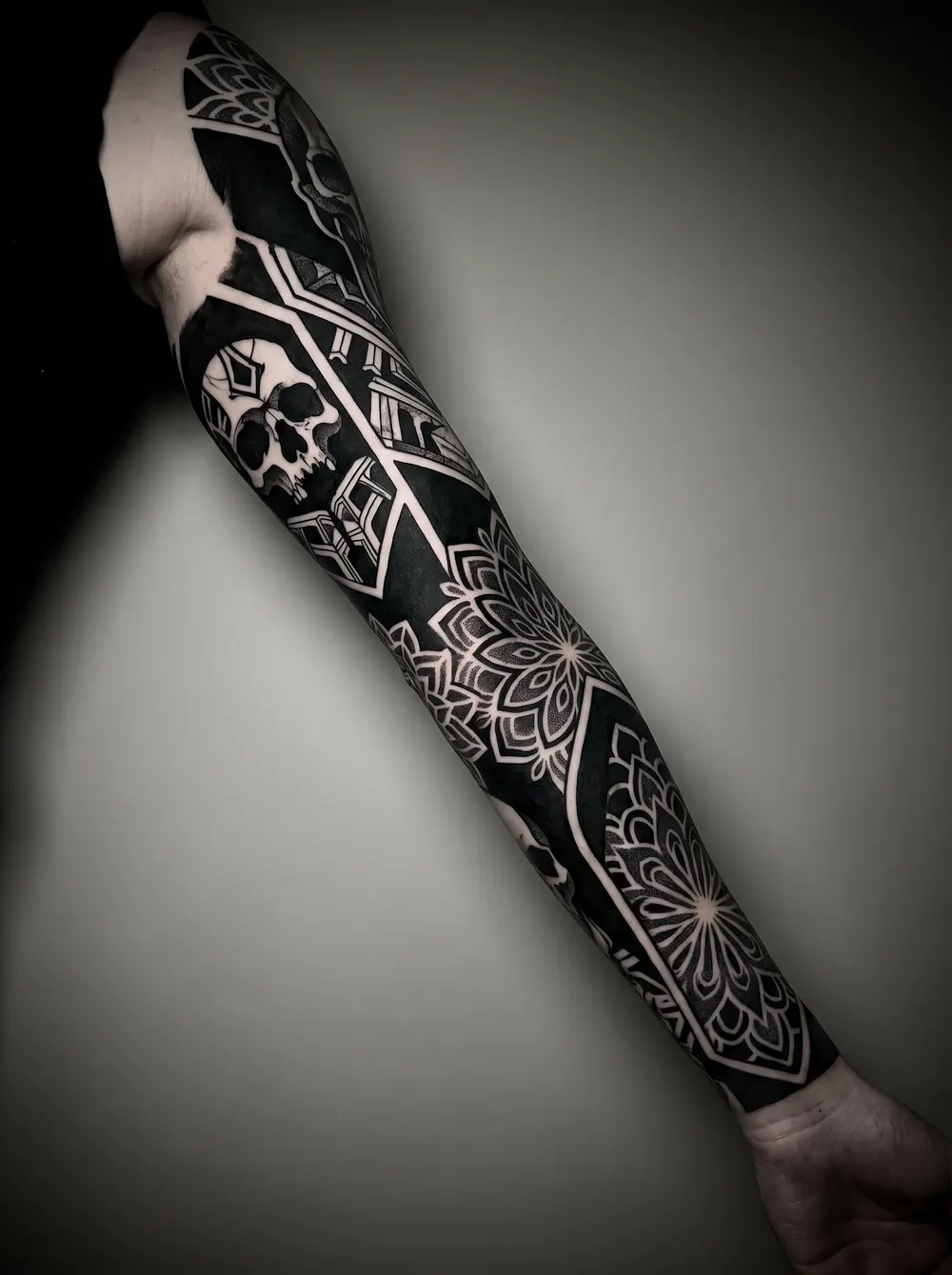
It's the first worry almost everyone has before a cover-up: will the old tattoo still be visible underneath the new one? The honest answer is that a cover-up is designed specifically to make sure it isn't — but that outcome depends entirely on the design. A cover-up done right reads as a fresh, standalone tattoo. A cover-up rushed onto a too-dark or too-large original can leave a faint ghost of the old lines. Knowing what separates the two is what keeps you out of the second camp.
What "ghosting" actually means
A cover-up does not remove the old ink — it is planned over it. "Ghosting" (or show-through) is when part of the old design remains perceptible through the new composition, often as a shadow or line in certain light or angles. Thin or light passages can contribute, but skin, pigment, scarring, placement, scale, and healing also matter. The response is not universal: an artist may discuss darker structure, redesign, extension, selective fading, or stopping.
When the old tattoo is most likely to show
Show-through isn't random. It clusters around a few predictable situations:
- The original is very dark or solid black, so there's little room for the new design to go darker over it.
- The cover-up is too light, delicate, or fine-line to block a bold original underneath.
- The new design is barely larger than the old one, leaving no space to route lines around the darkest areas.
- A crisp, saturated tattoo was covered without fading it first.
- The healed cover-up settled and lightened over time, revealing lines that were only just hidden at first.
How artists stop the old ink from showing
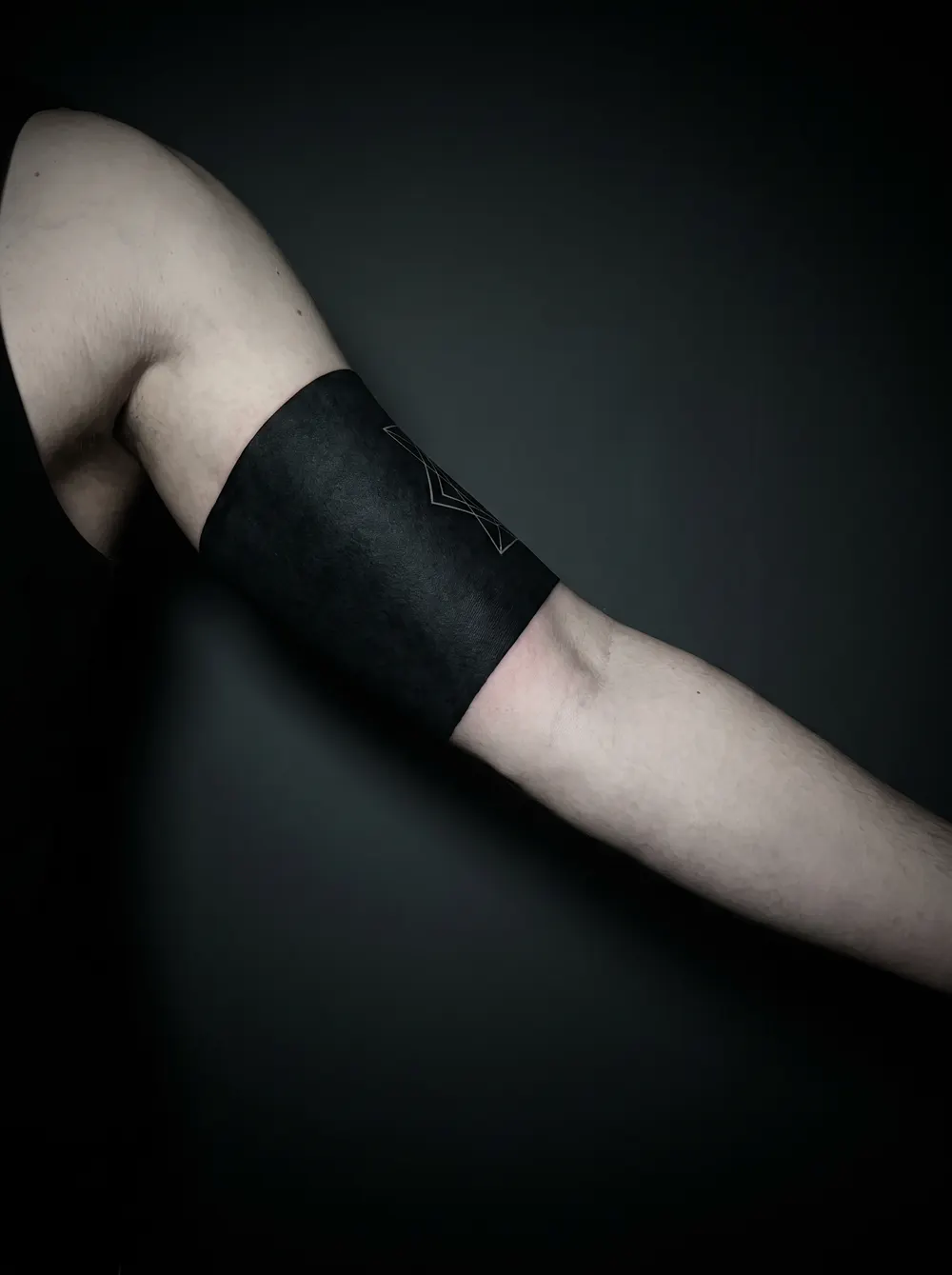
A skilled cover-up artist plans the new design around the old tattoo rather than applying a generic dark layer. Deep values may be placed over the most saturated passages, while scale, line route, negative space, subject, and body movement determine whether the composition stays readable. There is no reliable multiplier for size: the artist may need more area, a different subject, selective fading, or a decision to stop. Blackwork, dense florals, mandalas, and directional animals are possible languages, not automatic solutions.
When fading first is the real answer
Sometimes the old tattoo is too dense for the direction you want, and an artist may suggest a qualified laser consultation before drawing. The aim can be partial reduction of one restrictive block, not a guaranteed clean slate. Response, spacing, cost, skin risk, and suitability vary; let the laser provider explain those questions and let the tattoo artist explain what design constraint would change.
Preview a cover-up on your skin → Get the appHow to check before you commit
You can use a few directions over a photo of your actual tattoo as a conversation aid. If old lines remain visible in the preview, record that the direction may need a different value structure, subject, boundary, or fading discussion; if they disappear digitally, that still does not prove pigment coverage. Bring the unedited source beside the concept and ask the artist to mark the real boundary.
Can you fix a cover-up that already ghosts?
Sometimes a show-through concern can be addressed, but rework is not automatic. The artist may propose a limited value adjustment, a larger redesign, selective fading, or no further ink if the skin or boundary does not support it. Wait for the tattoo to settle, document the actual concern, and ask a specialist to distinguish a local passage from a structural problem.
FAQ
Will my old tattoo show through a cover-up?
It may remain perceptible depending on the old ink, skin, scale, composition, placement, and healing. A specialist must assess the actual tattoo; a digital preview cannot certify that every trace will be hidden.
Does a cover-up remove the old tattoo?
No. A cover-up never removes the original ink — it stays in the skin permanently. The new design sits on top and hides it. Only laser removal actually breaks down the old pigment.
Why can I still see my old tattoo through the cover-up?
A thin or light passage may leave the darker original perceptible, but the response depends on the full composition and skin. Ask whether a local revision, larger redesign, fading discussion, or stopping is the safer route.
Does a cover-up show more over time?
It can. As any tattoo heals and slowly lightens over the years, lines that were only just hidden can become faintly visible. A cover-up with plenty of dark density built in is far more likely to stay opaque as it ages.
How can I tell if a cover-up will hide the old one before booking?
Use a photo preview only to compare broad directions and identify questions. Whether the old tattoo can be managed requires an in-person specialist assessment of ink, skin, texture, placement, and the proposed stencil.
Related guides
Ombra Tattoo
AI cover-up and design concepts