Will My Tattoo Cover Up? The Factors That Decide
Updated
The Ombra Tattoo team · Written by the Ombra product team — practical guidance for planning tattoo ideas, placement, and cover-up questions.
Whether a cover-up is workable depends on the old ink's value and saturation, fading, colors, footprint, placement, texture, and the clear skin around it. Light or faded work usually leaves more routes; dense black or a previous cover-up can require a larger, darker composition or a separate fading consultation. A photo preview can compare broad directions, but it cannot decide pigment feasibility or replace an artist's inspection.
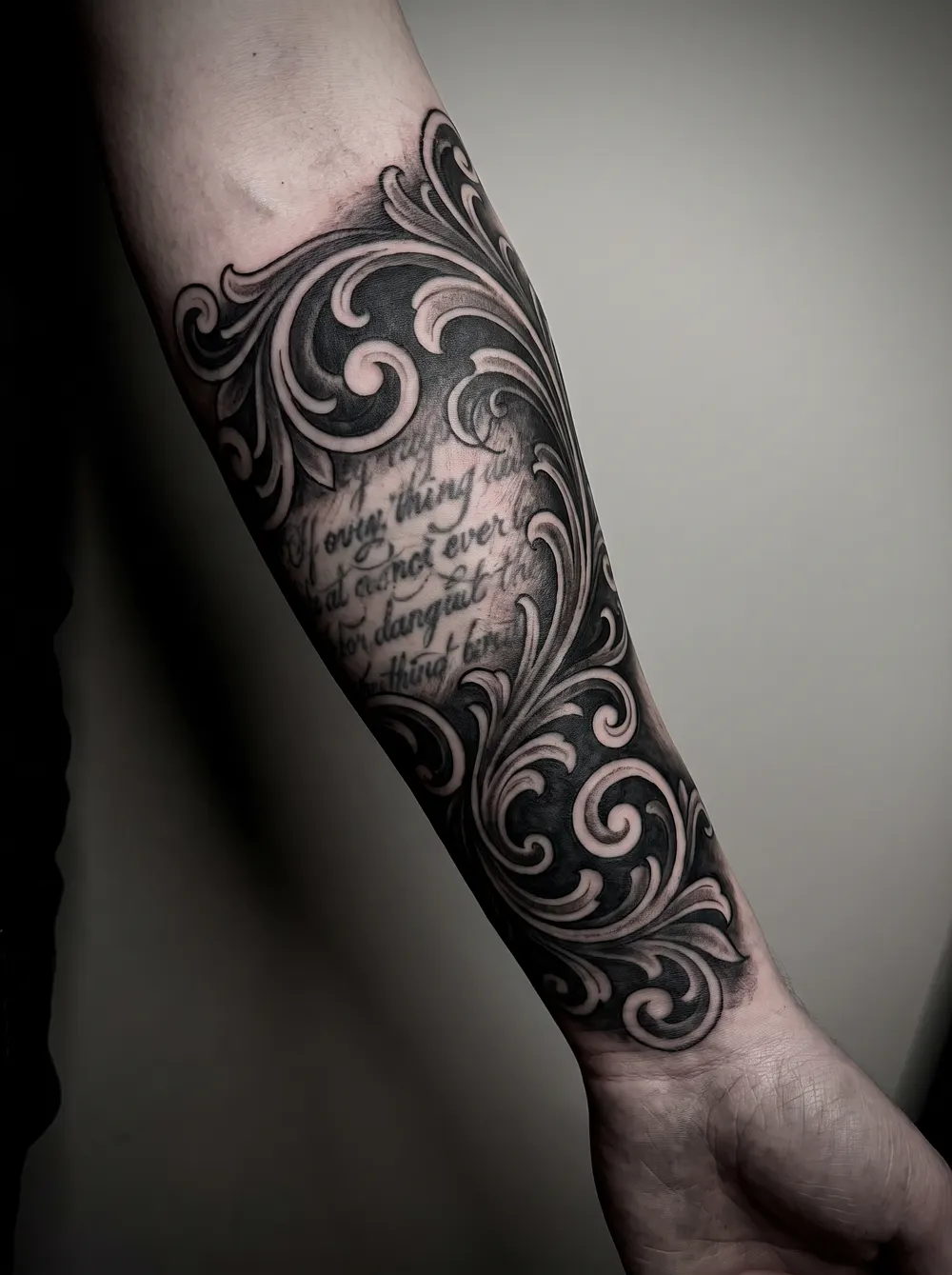
Almost any tattoo can be covered by the right design — the real question is what that design has to be. A small, light piece leaves you free to choose almost anything; a dense black one narrows the field to dark, bold cover-ups. Five factors decide where your tattoo falls on that scale.
How dark the old tattoo is
This is the single biggest factor. A cover-up only ever adds ink, so the new design has to be darker in value than the original everywhere they overlap. A pale, grey, or patchy tattoo is easy to work over; a solid black band or dense tribal is the hardest, because there's little room left to go darker. If yours is very dark, expect the plan to involve a bold blackout-style cover or a few laser-fading sessions first.
How much it has faded
Age is your friend here. Tattoos soften and lighten over the years as the ink disperses and the skin changes, so a decade-old piece with blurred lines gives an artist far more freedom than last year's crisp work. If your tattoo is still sharp and saturated, fading it — with time or a laser — widens your options considerably.
The colors underneath
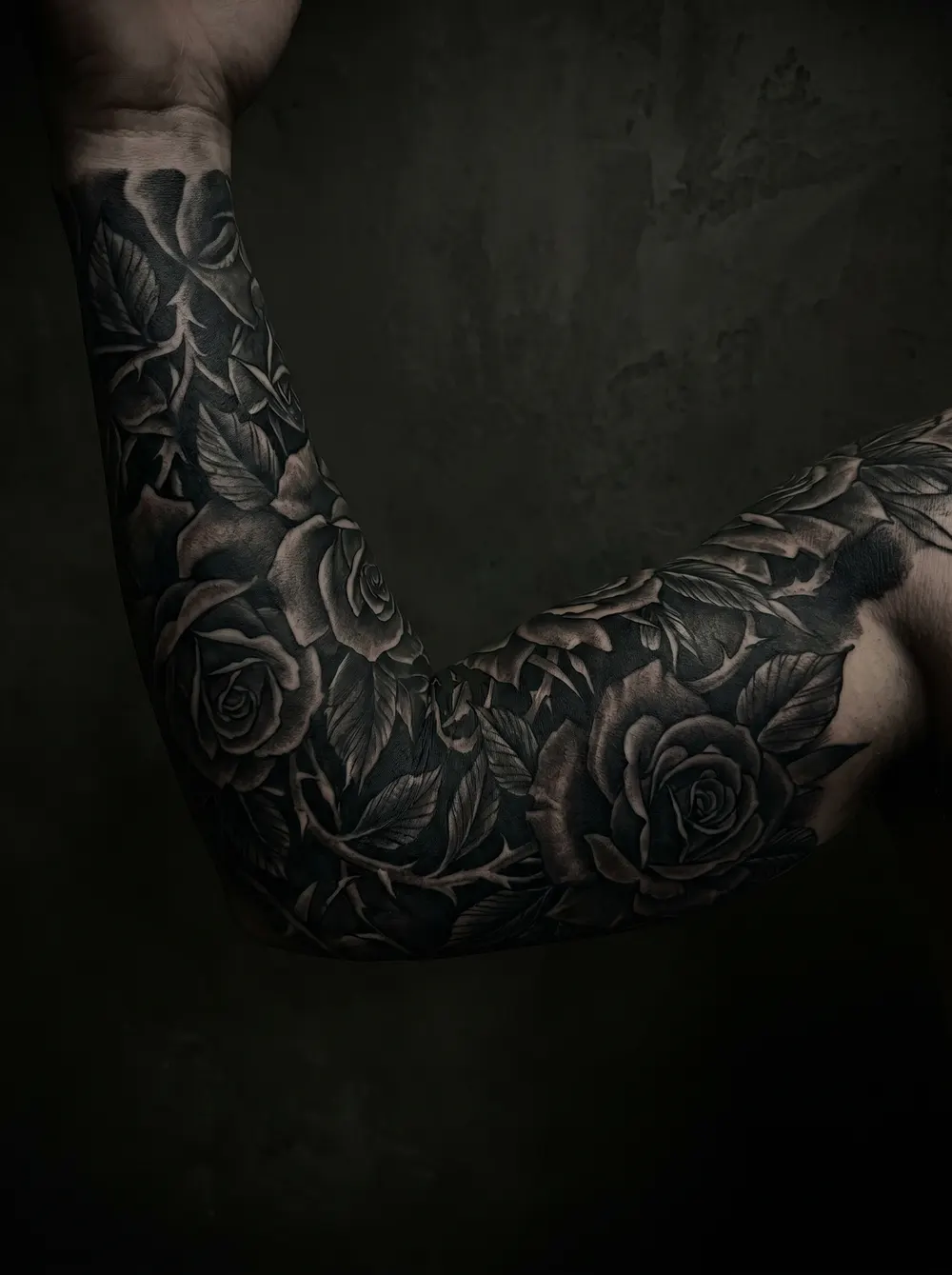
Color changes the math. Warm, light colors — yellows, light greens, orange — can subtly shift the tone of the new ink, but they're rarely dark enough to block a cover on their own. Deep blues, blacks, and heavy reds are the stubborn ones. A skilled cover-up artist plans a palette that neutralizes what's underneath rather than fighting it head-on.
If the starting point is very dark
Treat a dense black block, blackout passage, or earlier cover as a decision boundary rather than a prompt for stronger optimism. Ask the artist to mark which old areas can become the new shadow, where clear skin is needed, and whether your preferred footprint is technically realistic. The options may be a larger graphic composition, an extension that uses the old edge, a separate qualified laser consultation, or waiting until you can accept a different design. A generated overlay cannot choose among those routes.
- Keep the unedited source visible and describe the old tattoo's actual boundaries.
- Ask for comparable healed cover-up work, not a universal promise that all dark ink disappears.
- Record the maximum area and darkness you accept before discussing motifs.
- Let the specialist decide whether fading, redesign, extension, or postponement belongs in the plan.
The size of the original
A cover-up may need more area than the tattoo it replaces so the artist can route the new design around old lines and place the necessary value structure. There is no universal multiplier: the exact footprint depends on the old map, body surface, design, and your boundary. If you want a small, delicate cover, ask the artist whether fading or a different route is needed.
Where it is on your body
Placement affects coverage, composition, movement, and the artist's technical choices. Forearm, upper arm, thigh, and calf offer different surfaces; wrist, ankle, ribs, and hands bring different curvature, friction, and space constraints. Ask the specialist to assess the actual skin and explain which tradeoff the location creates.
Explore a cover-up direction on your photo → Get the appThe honest verdict
Grouped roughly by difficulty, most tattoos fall into one of three tiers:
- Easy to cover: faded, older, fine-line, or light-colored tattoos.
- Coverable with planning: medium-density work, some dark areas, or bold color — usually with a larger, darker design on top.
- Hardest: solid black, heavy tribal, or very dark saturated pieces — often best faded with laser first, or covered with a blackout design.
Wherever yours lands, use a preview only to compare broad directions on an honest photo of the actual tattoo. It cannot tell you whether a motif is dark or dense enough to cover pigment. Bring the source, the old boundary, and the questions to a cover-up specialist before booking.
FAQ
Can a dark tattoo be covered without laser?
Sometimes, depending on the old value map, placement, available area, and the artist's plan. For solid black or very dense pieces, a qualified laser consultation may be one route, but it is not an automatic recommendation or outcome guarantee.
Does an old tattoo cover up more easily than a new one?
Age can change saturation and line quality, but it does not decide the case by itself. Compare the actual old map and let the artist explain whether time, fading, redesign, or postponement changes the available route.
Will color ink show through a cover-up?
It can remain visible or influence the new palette, depending on the old pigment and the proposed composition. The artist must inspect the actual area and explain what can be hidden, incorporated, or left as a boundary.
How can I tell if my tattoo will cover up before booking?
Use a preview to compare broad directions and notice whether the source or old boundary has been changed. If old lines still show, treat that as a prompt for specialist questions—not proof that the design only needs to be darker, denser, or larger.
Related guides
Ombra Tattoo
AI cover-up and design concepts