Blackout Tattoo Cover-Up: When Solid Black Is the Right Call
Updated
The Ombra Tattoo team · Written by the Ombra product team — practical guidance for planning tattoo ideas, placement, and cover-up questions.
A blackout tattoo cover-up hides an old tattoo under a solid, saturated field of black ink instead of a picture. It's the most dependable way to cover very dark, dense, or scarred work that a conventional design can't beat, because it doesn't compete with the old ink — it buries it. Blackout works best on flat areas like the arm, leg, or shoulder, usually needs more than one session to pack the black in evenly, and is effectively permanent. It suits people who want guaranteed coverage and like a bold, minimalist look — not those hoping to leave the door open for a detailed piece later.
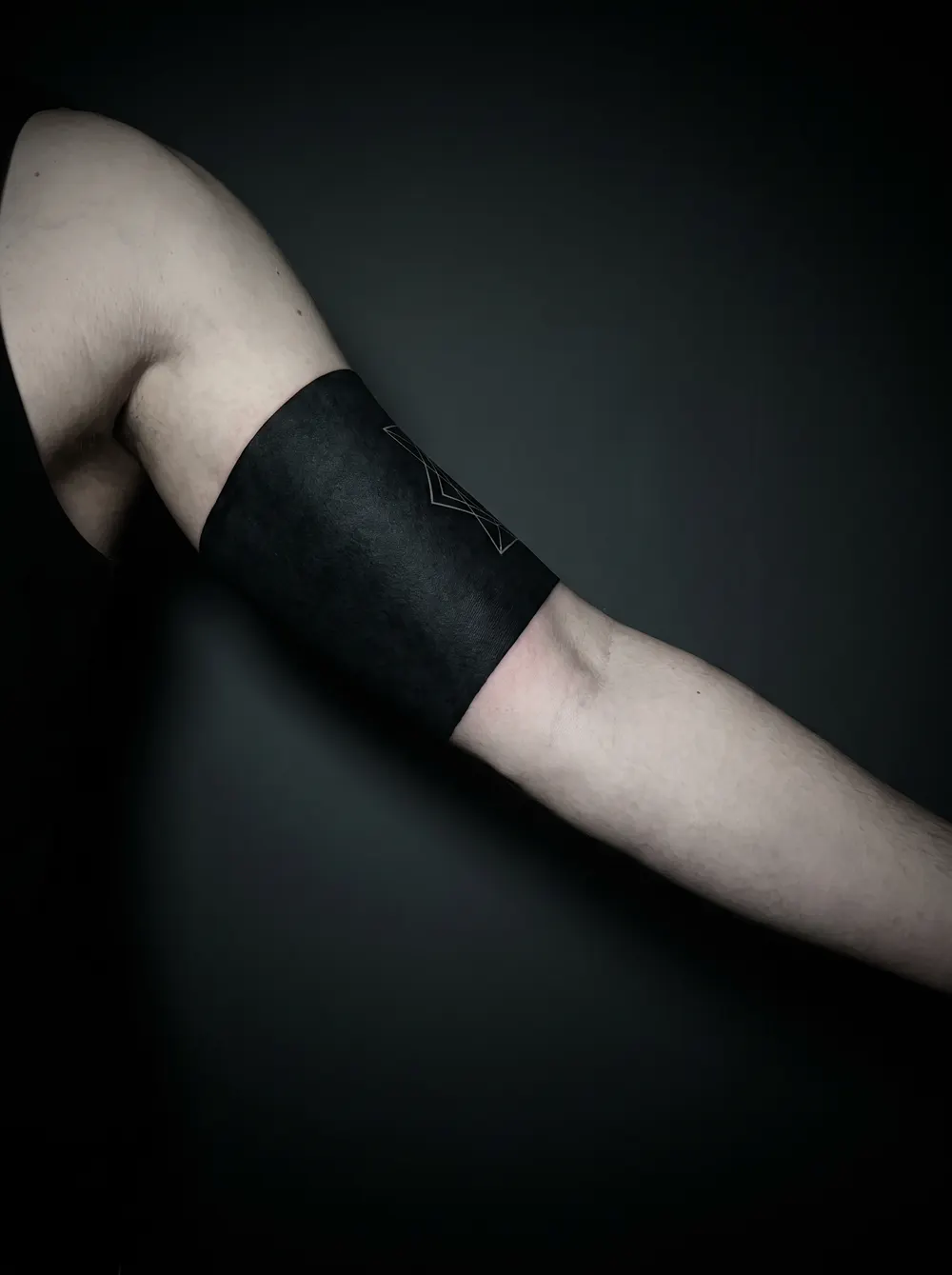
When a tattoo is too dark or too dense to hide under a normal design, artists reach for the one approach that always works: they cover it with solid black. A blackout cover-up trades a picture for a bold graphic statement — a clean field of deep black over the area — and in exchange it gives you coverage nothing else can match. It's not the right answer for every tattoo, but for the hardest cases it's often the only one that keeps its promise.
What a blackout cover-up actually is
Instead of routing a new design around the old lines, a blackout fills the whole section with saturated black ink so there's nothing left to see underneath. Some people keep it purely graphic — a solid band around the arm or leg, or a filled panel with crisp edges. Others leave a single fine-line motif in negative space (unfilled skin) inside the black, or plan a design in grey or white to sit over the blackout once it heals. Either way, the covering is done by the density of the black itself, not by a busier pattern.
When a blackout is the right choice
A cover-up only ever adds ink, so any new design has to be darker than the old one everywhere they overlap. That's simple with a faded, light tattoo and nearly impossible with a solid black band or dense tribal — there's no room left to go darker with a decorative design. Blackout sidesteps that problem entirely. Consider it when:
- The old tattoo is very dark or heavily saturated — solid black, thick tribal, or a botched cover-up already stacked with ink.
- You've tried or been quoted for a decorative cover-up and the old lines would still ghost through.
- There's scarring or uneven skin from a previous tattoo, and you want a single clean tone over it.
- You genuinely like the bold, minimalist look — a lot of people choose blackout for the aesthetic, not just as a last resort.
If your tattoo is lighter or faded, you probably don't need a blackout at all — a dense black-and-grey design will hide it while keeping something to look at. Blackout earns its place specifically when the old ink is too stubborn for that.
Blackout vs heavy blackwork
There's a middle ground worth knowing about. Heavy blackwork uses large areas of solid black too, but breaks them up with ornamental patterns, negative-space linework, and dotwork — so you still read a design rather than a flat panel. It can cover almost as aggressively as a full blackout while feeling less severe, which makes it a common compromise for people who want the coverage without committing to an all-black section.
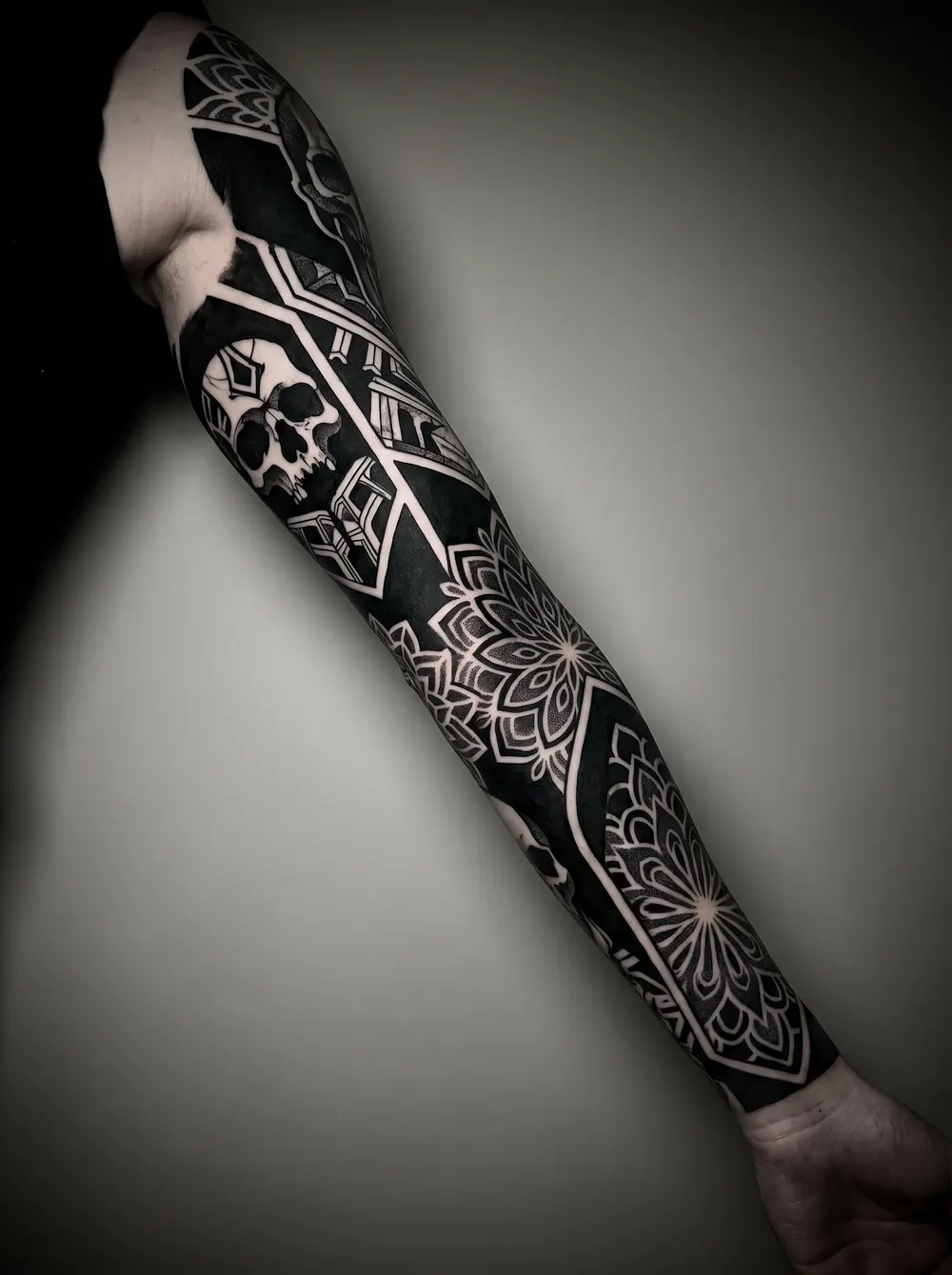
The trade-off is simple: the more pattern and negative space you keep, the more the old tattoo can influence the result — very dark areas underneath may still need extra passes. A full blackout removes that variable, which is exactly why artists fall back on it for the toughest cover-ups.
Preview a blackout on your skin → Get the appThe honest trade-offs
Blackout is powerful, but it asks for a few things in return, and a good artist will walk you through all of them before you sit down:
- It usually takes more than one session. Packing large areas of solid black evenly is demanding on both the artist and your skin, so big blackouts are often built up in stages to heal cleanly.
- Even saturation is the whole game. Patchy or grey-healing black is the most common disappointment, which is why placement, artist skill, and aftercare matter more here than with a lighter design.
- It's hard to reverse or re-cover. The sheer volume of ink spread over a large area makes removal a long, uncertain project, and it leaves little room for a future cover-up beyond white or grey work on top.
- Flat, fleshy areas hold it best. Arms, legs, shoulders, and backs take dense black beautifully; thin skin over bone fades faster and is trickier to saturate.
See it before you commit
Because a blackout is close to permanent, it's worth seeing the shape and coverage on your own arm before you're in the chair. Preview a blackout band or a dense blackwork panel over a photo of your actual tattoo in the Ombra Tattoo app — you'll quickly tell whether a clean solid section suits your body and how much area it needs to swallow the old ink. Treat the preview as a planning tool, not a stencil: bring the direction you like to a cover-up artist and let them design the real thing for your skin.
FAQ
Does a blackout tattoo fully hide the old one?
Yes — a properly saturated blackout is the most complete coverage there is, because solid black leaves nothing underneath to show through. The catch is even saturation: black that heals patchy can let hints of the old tattoo peek back, which is why it often takes more than one session.
Can a blackout tattoo cover-up be removed later?
Only with difficulty. Black ink actually responds to lasers better than most colors — the problem is quantity. A blackout saturates a large area, so thinning all of it out takes many sessions and often never fully clears. It's safest to treat a blackout as effectively permanent rather than something you can undo.
How many sessions does a blackout cover-up take?
It depends on the size and your skin, but large blackouts are commonly built up over more than one session so the black heals evenly. A small band may be done in one sitting; a big panel usually isn't. Your artist will map this out based on the area.
Can you put a design over a blackout?
To a degree. Once the black has healed, some artists add white or grey ink on top, or plan negative-space motifs into the blackout from the start. You won't get bright, detailed color over solid black, so decide on any design before the blackout goes in rather than after.
Related guides
Ombra Tattoo
AI cover-up and design concepts