Cover-Up vs Laser Removal: Which Is Right for You?
Updated
The Ombra Tattoo team · Written by the Ombra product team — practical guidance for planning tattoo ideas, placement, and cover-up questions.
Choose a cover-up when you want another tattoo and accept a design that is usually larger and darker than the old piece. Consider laser when your goal is less visible ink or when a suitable cover-up would be too large. Some people fade first, then cover. A tattoo artist and a qualified laser provider should assess the respective options.
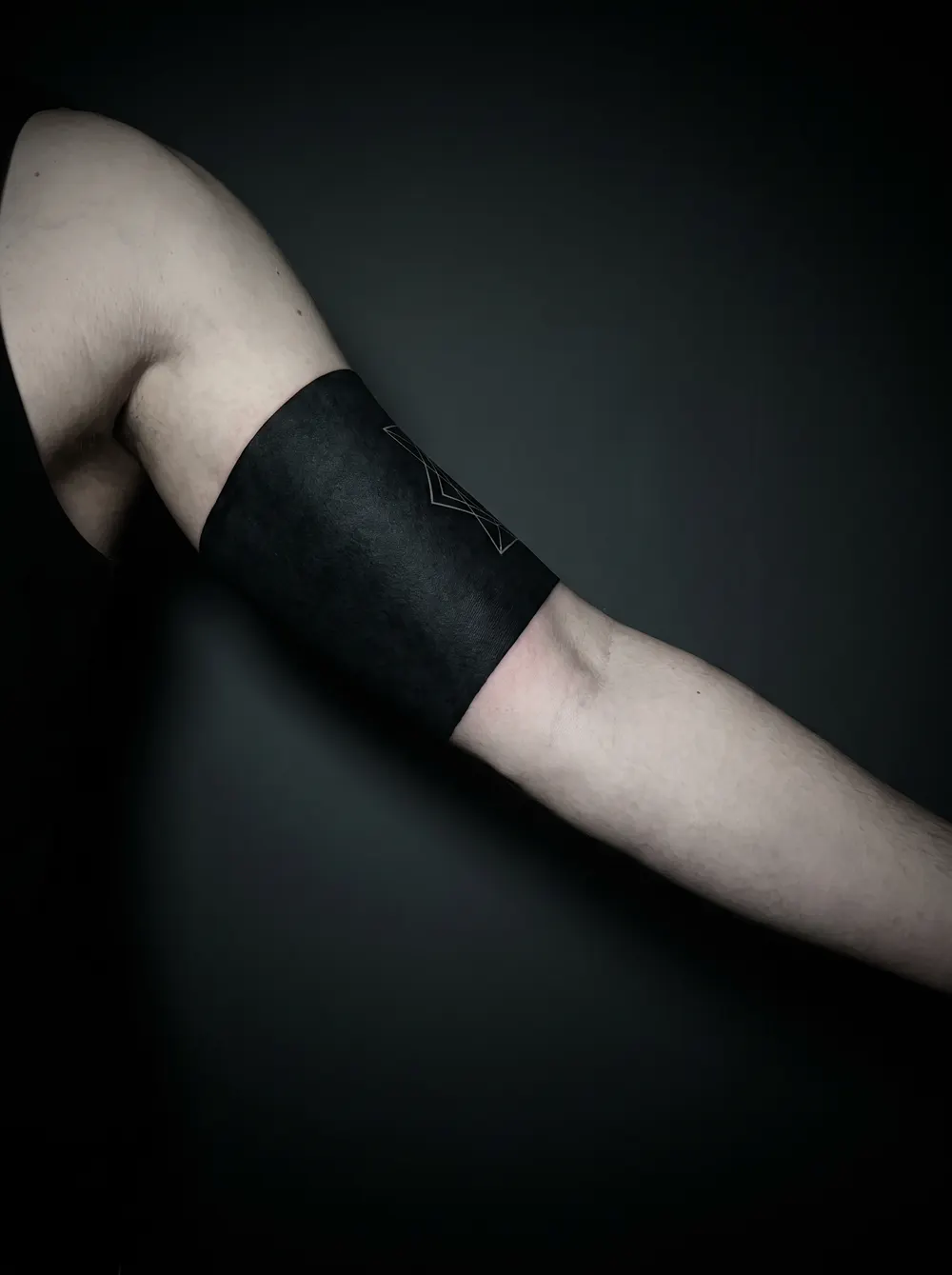
The real question isn't which method is better — it's what you want the skin to look like when you're done. A cover-up leaves you with a new tattoo you chose. Laser removal works toward blank (or nearly blank) skin. Everything else — cost, time, pain — follows from that one decision.
What each one actually does
A cover-up hides the old tattoo beneath a new, larger, darker design; the original ink stays in your skin, disguised as shadow and detail. Laser removal takes the opposite route — pulses of light break the ink into fragments small enough for your body to carry away over time, lightening the tattoo session by session. They solve the same regret in completely different ways.
How well laser works depends on the tattoo and your skin. Black and dark inks tend to break down most predictably, while some bright colors — greens, light blues, and yellows — are more stubborn and can take extra sessions or never fully clear. That's a big reason so many people fade rather than fully remove: getting a dark tattoo light enough to cover cleanly is usually faster and more reliable than chasing out every last trace of color.
When a cover-up wins
- You want to stay tattooed — swapping a design you regret for one you love, not going blank.
- The old tattoo is light, faded, or medium in density, so a dark, dense design can cover it cleanly.
- You want results quickly: a cover-up is usually one session, or a few for large pieces, not months of visits.
- You'd rather pay once than spread the cost across many appointments.
When laser removal wins
- You want the skin blank — no tattoo there at all, or room for something small and light later.
- The tattoo is small; less ink generally means fewer sessions to clear.
- A cover-up would have to be bigger or darker than you want — removal takes that constraint away.
- You're planning a detailed or light-colored new tattoo that a cover-up simply couldn't accommodate.
The middle path: fade, then cover
These aren't mutually exclusive. The most reliable route for a dark, stubborn tattoo is often a hybrid: a few laser sessions to fade the original — not erase it — followed by a cover-up that no longer has to fight a wall of black. You get more design freedom than a straight cover-up and far less time in the chair than full removal.
Preview a cover-up on your skin → Get the appSo which is right for you?
If you want to stay inked and your tattoo can be covered, a cover-up is the faster, one-and-done path. If you want the area truly clear — or you're set on a delicate new piece — laser is the route, as long as you have the patience and budget for multiple sessions. And if you're not sure the old tattoo even needs removing, find out cheaply first: preview a cover-up over a photo of it in the Ombra Tattoo app. If a dark, dense design hides it cleanly in the preview, you may not need laser at all.
FAQ
Is laser removal or a cover-up cheaper?
It depends on the tattoo. A cover-up is usually a single, larger tattoo you pay for once; laser removal is billed per session across many visits, so the total can climb. Get a personalized quote for both before deciding.
Does laser removal always fully erase a tattoo?
Not always. Many tattoos fade dramatically or clear completely, but some colors and inks are stubborn, and results vary by skin and tattoo. Plenty of people use laser to fade a tattoo enough for a better cover-up rather than remove it entirely.
Which hurts more, laser or a cover-up?
Both are uncomfortable. A cover-up feels like a normal — if long — tattoo session. Laser is often described as a hotter, snapping sensation over shorter but repeated visits. Pain tolerance is personal, so weigh it accordingly.
Can I combine the two?
Yes, and it's common. A few laser-fading sessions lighten a dark tattoo so a cover-up can sit cleanly on top — the best of both when the original is too dark to cover directly.
Related guides
Ombra Tattoo
AI cover-up and design concepts