
How to Fade a Tattoo for a Cover-Up
Updated
The Ombra Tattoo team · Written by the Ombra product team — practical guidance for planning tattoo ideas, placement, and cover-up questions.
Fading a tattoo for a cover-up means using a few laser sessions to lighten the old ink rather than remove it, so the new design no longer has to be dark enough to bury a solid black base. Start with the cover-up artist, not the laser clinic: they decide how light the old piece needs to be for the design you actually want, and that target is what you book sessions against. A fade takes far fewer sessions than full removal, but they are spaced a couple of months apart so your body can clear the broken-up ink, so plan in months rather than weeks. Whether your tattoo can be lasered at all, and how your particular ink and skin will respond, is a call for a qualified clinician — not something to decide from an article.
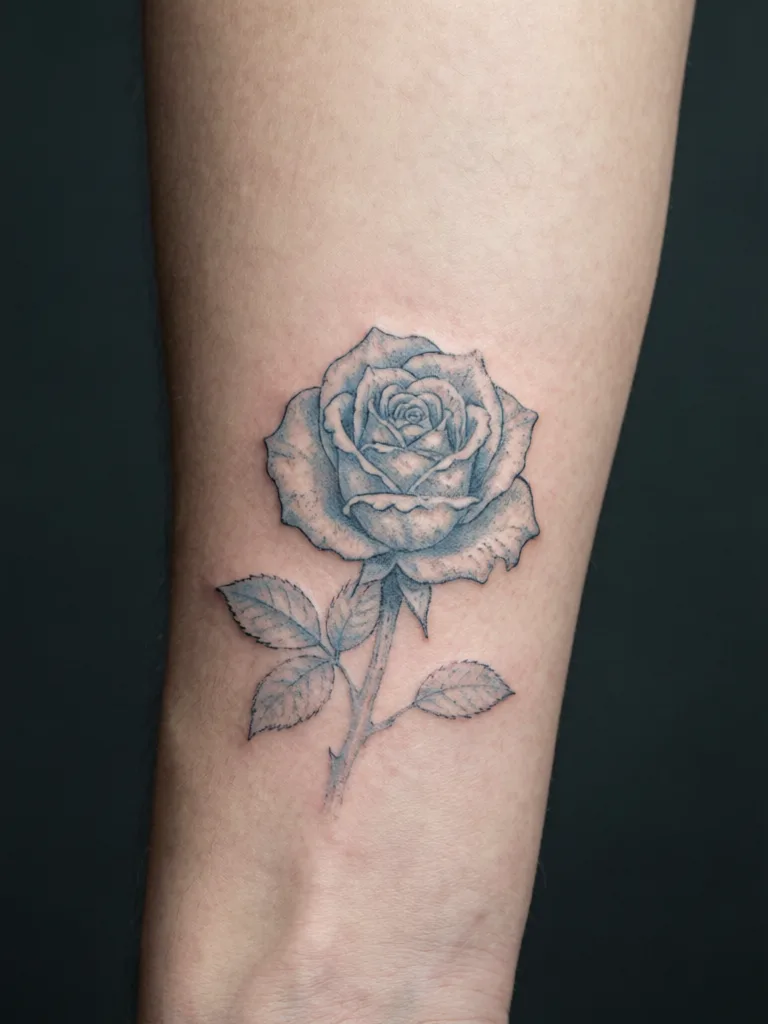
Most people meet this idea the same way: they take a design they love to a cover-up artist and hear that it won't work over ink that dark — not at that size, not in that style, not without going far heavier than they had in mind. Fading is the way out of that corner. A few laser sessions take the old tattoo from a wall of solid black down to a grey ghost, and the design becomes possible. The point isn't to erase anything; it's to give the artist something easier to work over.
What fading actually means
Fading and removal are the same procedure aimed at different finish lines. Laser pulses break up ink so your body can gradually carry it away; run that to completion and you are chasing blank skin, which is slow, expensive and never fully guaranteed — some colors are stubborn and results vary from person to person. Stop early and you have a fade: the tattoo is still there, just lighter and less saturated. Stopping early is the whole advantage: it asks far less of your time and budget, and a remaining trace doesn't matter — the new tattoo is going on top of it.
Not all ink lightens, though. Light, white, flesh-toned, peach and pink pigments can react to laser by going darker or grey instead of fading, and that isn't always reversible. The case most worth flagging here is flesh-toned ink that was itself tattooed over an older design as a cover-up attempt — which describes a lot of people reading this. It's uncommon but real, and it matters more here than it would for removal, because a base that darkens leaves you worse off than when you started. It's why the clinic has to assess your specific tattoo, not just your skin.
Why your artist may ask you to fade first
A cover-up artist is solving a contrast problem. Old ink shows through anything lighter than itself, so the new design has to be darker and denser than what's underneath — that's the constraint that pushes cover-ups toward heavy blackwork, big shapes and dark palettes. Lightening the base loosens every part of that constraint at once:
- Style freedom — a lighter base opens up mid-tone greys, fine detail and softer designs that could never hide a dark original.
- Size — you may not need to go as large, because the new piece no longer has to overwhelm the old one with sheer coverage.
- Color — a faded base makes color work far more predictable, since dark ink underneath muddies whatever goes over it.
- Less ghosting risk — the lighter the original, the less chance of it reappearing as the new tattoo settles and ages.
- Placement — a design that was impossible over the old shape may now fit the area you actually wanted it in.
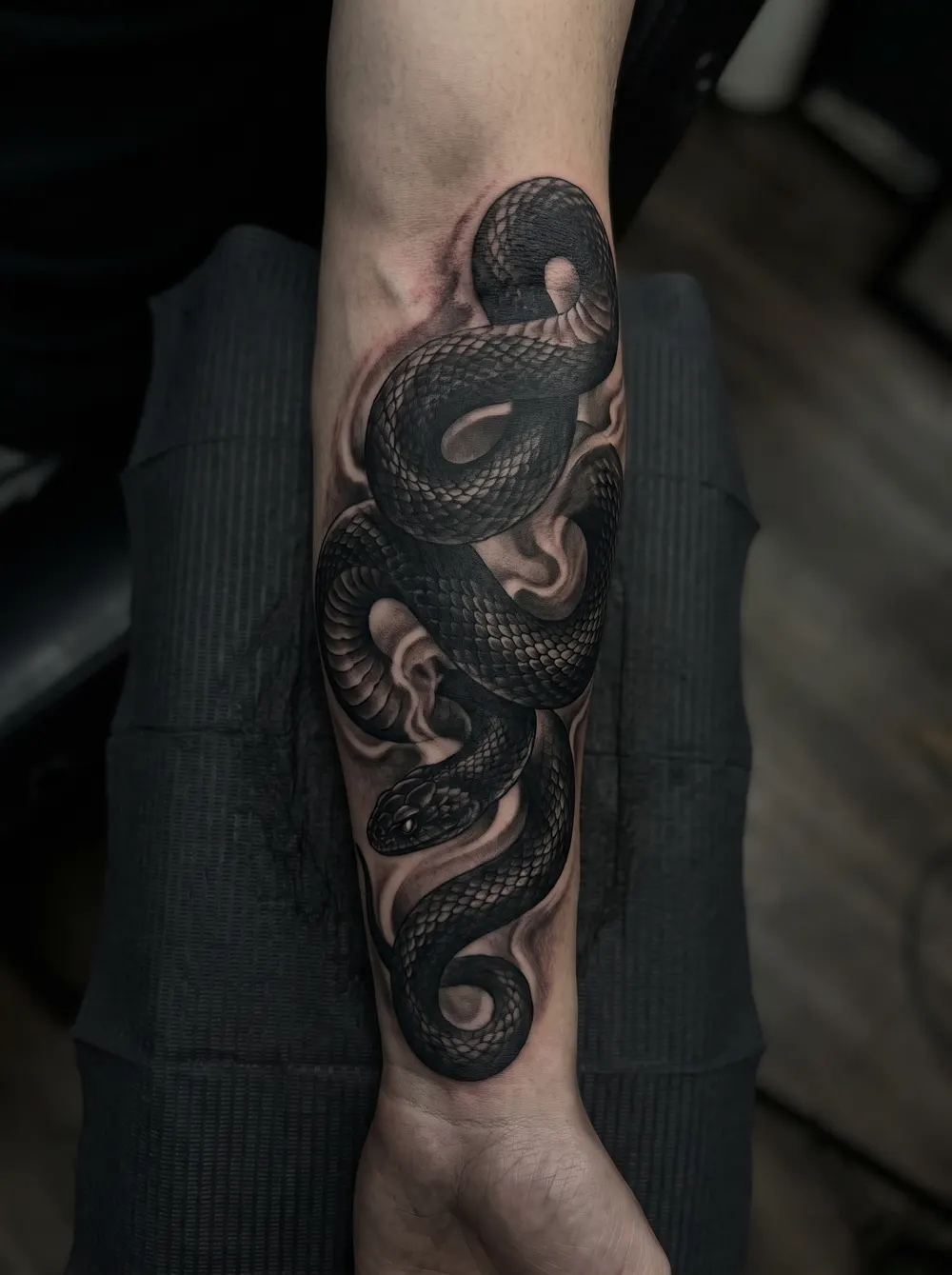
How to fade a tattoo for a cover-up, step by step
Take your cover-up idea to an artist first
This is the step people skip, and it sets everything else. Book a consultation with a cover-up specialist and bring the design you actually want. They will tell you whether it works over the tattoo as it is today — and plenty of the time it does, which means you can skip lasering entirely. Fading is only worth doing if it buys you a design you couldn't otherwise have.
Agree on a fade target, not a session count
Ask the artist how light the old piece needs to be, and in which areas — often only the darkest part of a tattoo is the real obstacle. That target is the brief. Nobody can honestly promise you a number of sessions up front, because how quickly ink breaks down varies with its color, depth, age and your own skin, so booking against a target rather than a count keeps you from over-lasering.
Choose a reputable clinic, and say you're fading — not removing
Laser is a clinical procedure, so treat it like one: go to a qualified, licensed provider, ask what device they use and how much experience they have with your skin tone and ink colors, and expect a proper assessment first. Ask for a test patch rather than waiting to be offered one, especially if there's any white, flesh-toned, peach or pink ink in the piece, or if someone has already tattooed over it once. Then be explicit that you're fading for a cover-up — someone aiming for full clearance treats more aggressively than someone aiming for a workably even lighter base — and bring the artist's target, or the design itself.
Space the sessions and let your skin recover fully
Sessions are spaced a couple of months apart because the fading happens between them, not during them — your body needs that time to clear the broken-up ink. Follow the clinic's aftercare instructions exactly, keep the area out of the sun, and don't try to rush the calendar. Going back too soon asks more of your skin without buying more fade.
Check back with the artist before booking more sessions
Once the tattoo has visibly lightened, send the artist a photo or drop in. The whole point is to stop at the target — sessions past it cost money, time and skin recovery for a benefit your cover-up won't use. Let the person who has to tattoo over it be the one who says it's ready.
Wait for the skin to settle, then get the cover-up
Give the area time to fully recover after the last laser session before tattooing over it; your clinic and artist will agree on how long, and they may want longer than you'd like. Then book the cover-up — and expect the artist to adjust the design a little now that they can see what the faded base really looks like.
How long the whole thing takes
Longer than a straight cover-up, much shorter than full removal — but do the arithmetic before you commit. Sessions sit a couple of months apart, so even a handful of them plus the wait before the skin is ready to tattoo puts the whole plan at many months, often the better part of a year. That's the real trade-off: you may be giving up much of a year to get a better tattoo at the end of it. If the design you gain isn't worth that, a well-designed dark cover-up done next month is a perfectly good answer.
When fading isn't worth it
Fading is a tool, not a default. Skip it when the old tattoo is already light or patchy — plenty of blown-out or amateur work can be covered directly, and you'd be paying to solve a problem you don't have. Skip it when you were always going to want something dark and dense, like a blackwork or blackout piece: those cover a dark base perfectly well as-is, so the lasering buys you nothing. And reconsider it if what you actually want is blank skin rather than a new tattoo — that's a different plan with a different timeline. The deciding question never changes: does lightening the base unlock a design you genuinely want and can't otherwise have?
FAQ
How many laser sessions does it take to fade a tattoo for a cover-up?
Nobody can give you an honest number in advance — a fade needs far fewer sessions than full removal, but the count depends on your specific ink and skin. That is why you book against your artist's target rather than against a number.
Do I need to fade my tattoo before a cover-up?
Often not — so ask a cover-up artist before you book any laser. Fading earns its time and cost only when the old ink is too dark for the specific design you have in mind.
Is fading cheaper than full laser removal?
It generally costs less overall, because laser is billed per session and a fade needs fewer of them than chasing complete clearance does. But it's an added cost on top of the cover-up itself, so get quotes for both before deciding.
Will the old tattoo still show through after fading?
A fade deliberately leaves a trace — the goal is a lighter base, not blank skin — and a cover-up over that lighter base has an easier time hiding it than one fighting a solid dark original. Ghosting risk drops as the base gets lighter, which is exactly why artists ask for the fade.
Can I fade a tattoo at home instead?
No — creams, sanding, salt scrubs and similar home methods risk scarring your skin, and scar tissue is much harder to tattoo over than faded ink. That trades a cover-up problem for a permanent one. Fading for a cover-up means a qualified clinic, or no fading at all.
Related guides
Ombra Tattoo
AI cover-up and design concepts