How to Cover Up a Tattoo
Updated
The Ombra Tattoo team · Written by the Ombra product team — practical guidance for planning tattoo ideas, placement, and cover-up questions.
To cover up a tattoo, an artist maps the old design and develops a new composition whose value, scale, subject, and boundary can manage it. Organic, high-contrast motifs may offer useful structure, but no motif is automatic. Very dark or solid tattoos may lead to a selective-fading discussion; timing and suitability vary. Before you book, use a preview only to compare broad directions on your own skin, not to certify coverage.
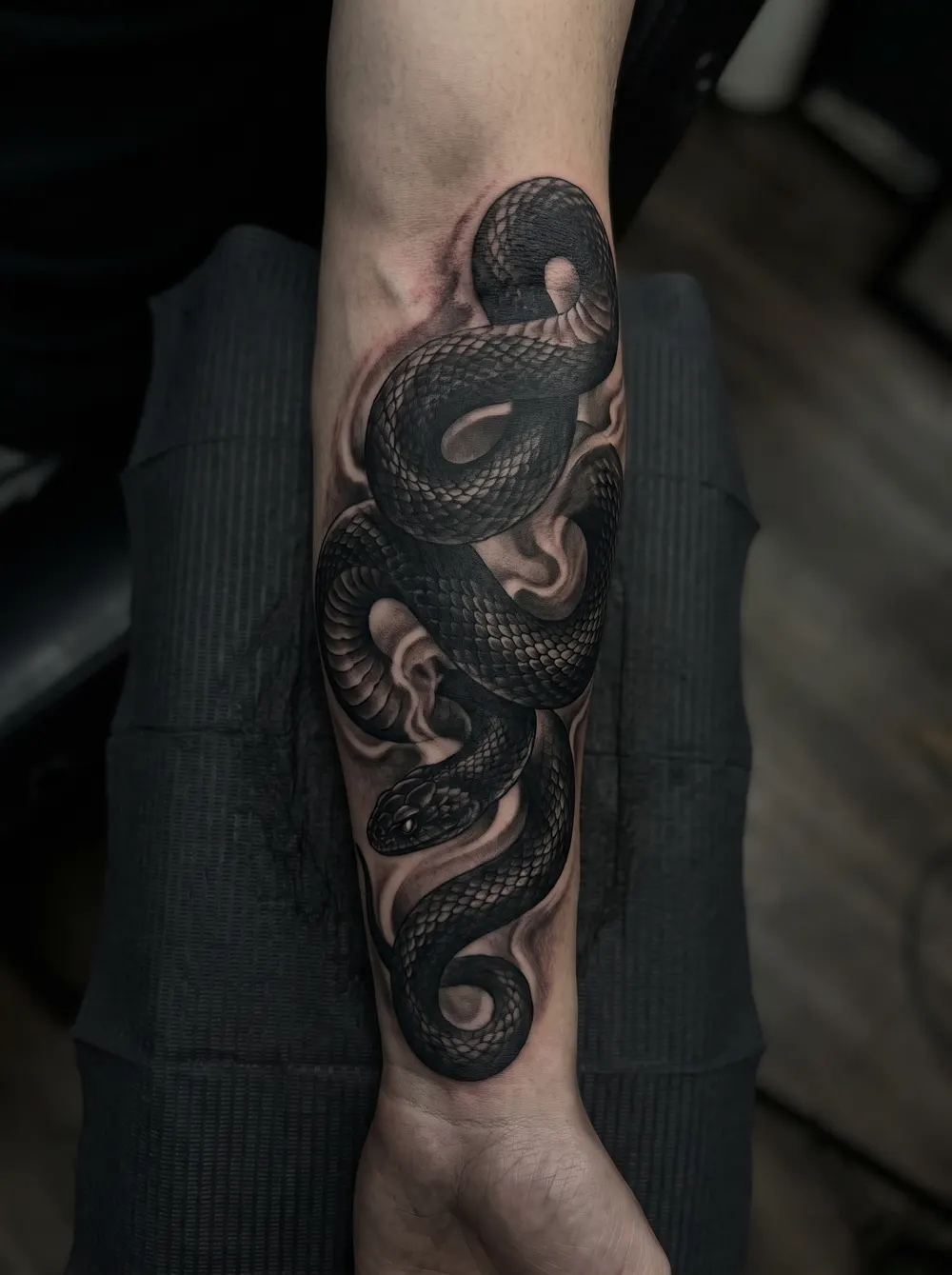
A cover-up develops a new composition around an existing tattoo. The design needs to work on its own while accounting for the old ink, skin, and your preferences. Neither a digital preview nor a general design rule can promise that every trace will disappear.
Can every tattoo be covered?
An artist must assess the actual tattoo and skin. A faded line drawing, a solid black area, saturated color, an earlier cover-up, and a strict size limit present different questions. Ask which parts could be incorporated into a composition and whether redesign, extension, a qualified laser consultation, or waiting deserves consideration.
How to cover up a tattoo, step by step
Assess the old tattoo
Photograph it in bright, even daylight and look honestly at three things: how dark it is, how large it is, and how sharp the lines still are. A soft, grey, decade-old piece gives your artist far more room than a fresh, solid black one.
Choose a design dark and dense enough to cover
Cover-ups depend on the relationship between motif and old-ink map. Organic shapes with shadow can give an artist routes around dense passages, but the right subject, value structure, negative space, and body boundary are case-specific. There is no safe size multiplier; ask what footprint the actual skin and composition require.
Discuss the options if the original is very dark
If the old tattoo is solid, dark, or heavily saturated, the artist may suggest a qualified laser consultation before drawing. The question may be partial reduction of one restrictive area rather than complete removal. Response, spacing, cost, and suitability vary, so let the laser provider explain treatment questions and the artist explain what design constraint would change.
Find a cover-up specialist
Not every talented tattooer loves cover-up work; it's a distinct skill. Look through portfolios specifically for before-and-after cover-ups, not just clean designs. A specialist reads your existing lines and designs a custom stencil that uses them — turning old shapes into shadows and leaves instead of pretending they aren't there.
Preview it on your own skin
Before you commit to a direction, compare broad concepts over an unedited photo of the old tattoo in the Ombra Tattoo app. The preview is not a pigment, feasibility, or coverage test; bring the source, old boundary, and questions to the cover-up specialist.
Book, and plan for the sessions it needs
Larger, denser cover-ups sometimes take more than one sitting, and a piece that's burying old ink may want a touch-up once it heals. Talk through the likely number of sessions and the healing gaps with your artist up front so nothing catches you by surprise.
Write the decision boundary before booking
Do not let an optimistic mockup decide that a solid black field, an earlier cover-up, or a dense saturated area is solved. Ask the artist to mark which old areas can become new shadow, where clear skin is needed, and whether the proposal fits your accepted size and darkness boundary. The realistic routes may include a larger graphic composition, an extension that uses the old edge, a separate qualified laser consultation, or waiting; the image cannot choose among them.
- Show the unedited source photo and the actual old boundary together.
- Ask for context from comparable healed cover-up work rather than a universal promise.
- Write your maximum acceptable area and darkness before choosing a motif.
- Leave fading, redesign, extension, or postponement decisions to the relevant specialist.
What makes a cover-up actually work
- Old-ink map: ask which existing passages the new composition would incorporate and which might remain perceptible.
- Contrast: ask where shadow, detail, and clear skin support the intended subject.
- Boundary: compare the proposed footprint with the maximum area and darkness you accept.
- Placement: have the artist assess the actual skin, body contours, and movement rather than using a regional ranking.
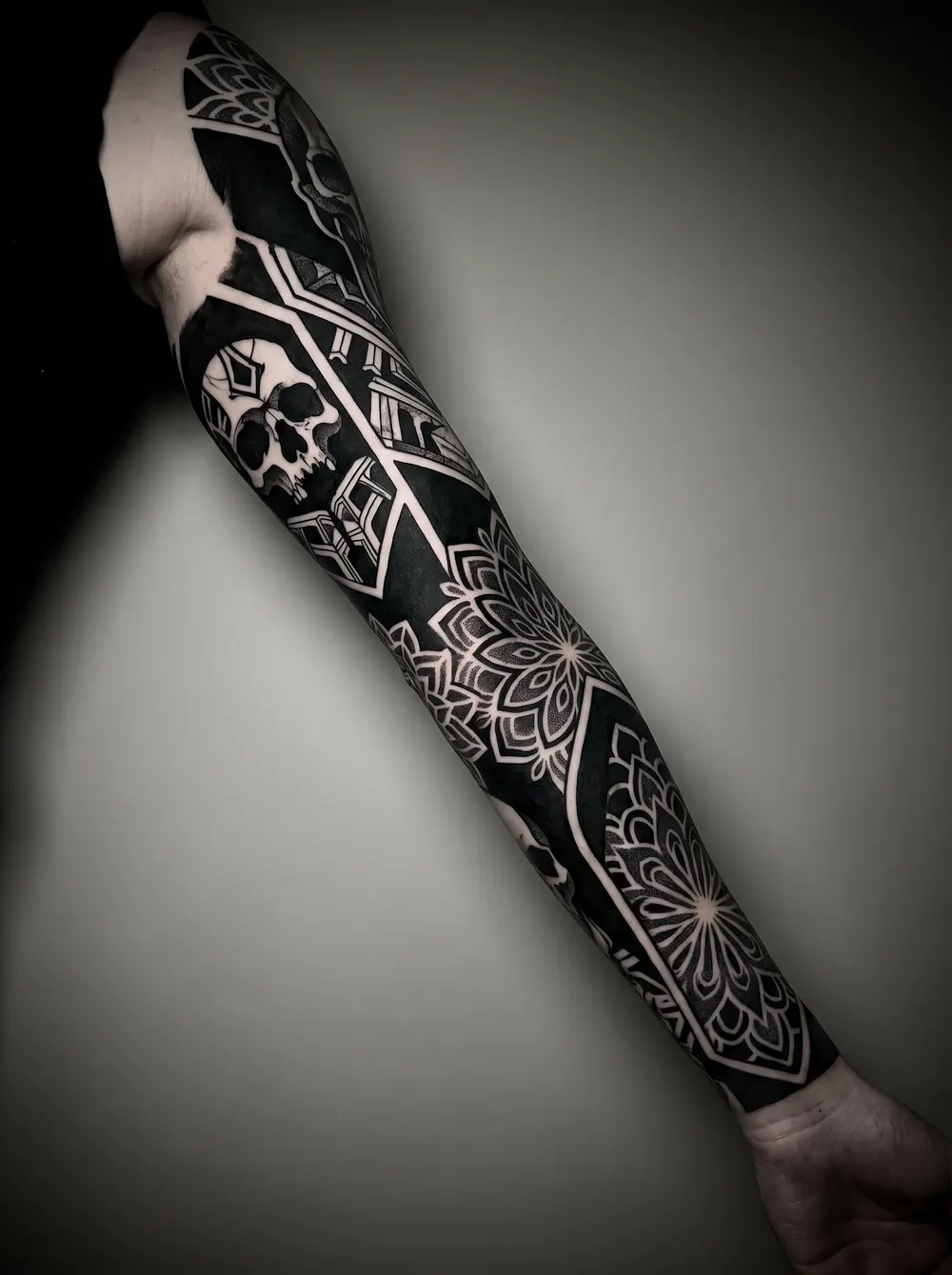
Write your accepted area and darkness before considering proposals. A larger or darker composition may be suggested, but you do not have to accept it because a preview looks convincing. Ask which traces may remain and whether the proposal respects your boundary.
Preview a cover-up on your skin → Get the appCover-up directions to start from
If the original is dark, a blackout or heavy blackwork route may control show-through, but it is a major aesthetic and area decision rather than a guaranteed result. For lighter originals, florals or snakes may provide useful routes without making them automatic. Compare broad directions over the original photo, then ask the artist to assess the real skin and boundary.
FAQ
Can a tattoo be fully covered in one session?
An in-person assessment is needed to plan the sessions. The old ink, proposed composition, skin, and agreed boundary matter; a photo or general size rule cannot promise one sitting.
Do cover-up tattoos have to be black?
No. Ask the artist where darker passages, color, and clear skin belong in the proposed composition. A color change alone is not proof that the old tattoo will be hidden.
Will the old tattoo show through later?
Parts of the old tattoo may remain perceptible. Ask the artist to explain this possibility using relevant healed work and to assess whether redesign, partial fading, a different boundary, or waiting fits your case.
How do I know a design will hide my tattoo before I book?
An AI preview cannot establish that a design will hide the tattoo in skin. Use it to compare visual preferences, then bring the unedited source and your size and darkness limits to a cover-up specialist.
Related guides
Ombra Tattoo
AI cover-up and design concepts