Cover-Up Tattoo Before and After
Updated
The Ombra Tattoo team · Written by the Ombra product team — practical guidance for planning tattoo ideas, placement, and cover-up questions.
In a cover-up tattoo before and after, the thing that changes most is not the subject — it is the scale and the weight. The new design is almost always larger than the original, darker, and far denser, because covering old ink means putting more pigment over every part of it rather than drawing around it. That usually means a shift toward blackwork, heavy shading and busy organic shapes, and away from fine lines, light colors and open skin. The other half of the answer is timing: most before-and-after photos online show a cover-up on the day it was finished, when it is at its sharpest and darkest. A healed cover-up softens, lightens slightly and settles over the following weeks, so the honest "after" is the one photographed a month or more later — and those are the rarest pictures on the internet.
Searching for cover-up before-and-afters is the right instinct — you want to know what you are actually buying before you sit down for it. The trouble is that the pictures answer a narrower question than the one you are asking. They show you that a cover-up worked for someone else, on their tattoo, photographed on the best day of its life. What they rarely show is the trade you made to get there. This post is about that trade: what genuinely changes between the old tattoo and the healed new one, and how to look at anyone's before-and-after — including ours — without being misled by it.
What actually changes between the before and the after
A cover-up is not a redraw. The old ink stays in your skin permanently; the new tattoo has to sit on top of it and out-weigh it visually. Nearly everything that surprises people about the result follows from that one constraint.
- It gets bigger. The new design needs room to break up the old outline, so it usually extends past the original's edges — often considerably. A small piece rarely becomes another small piece.
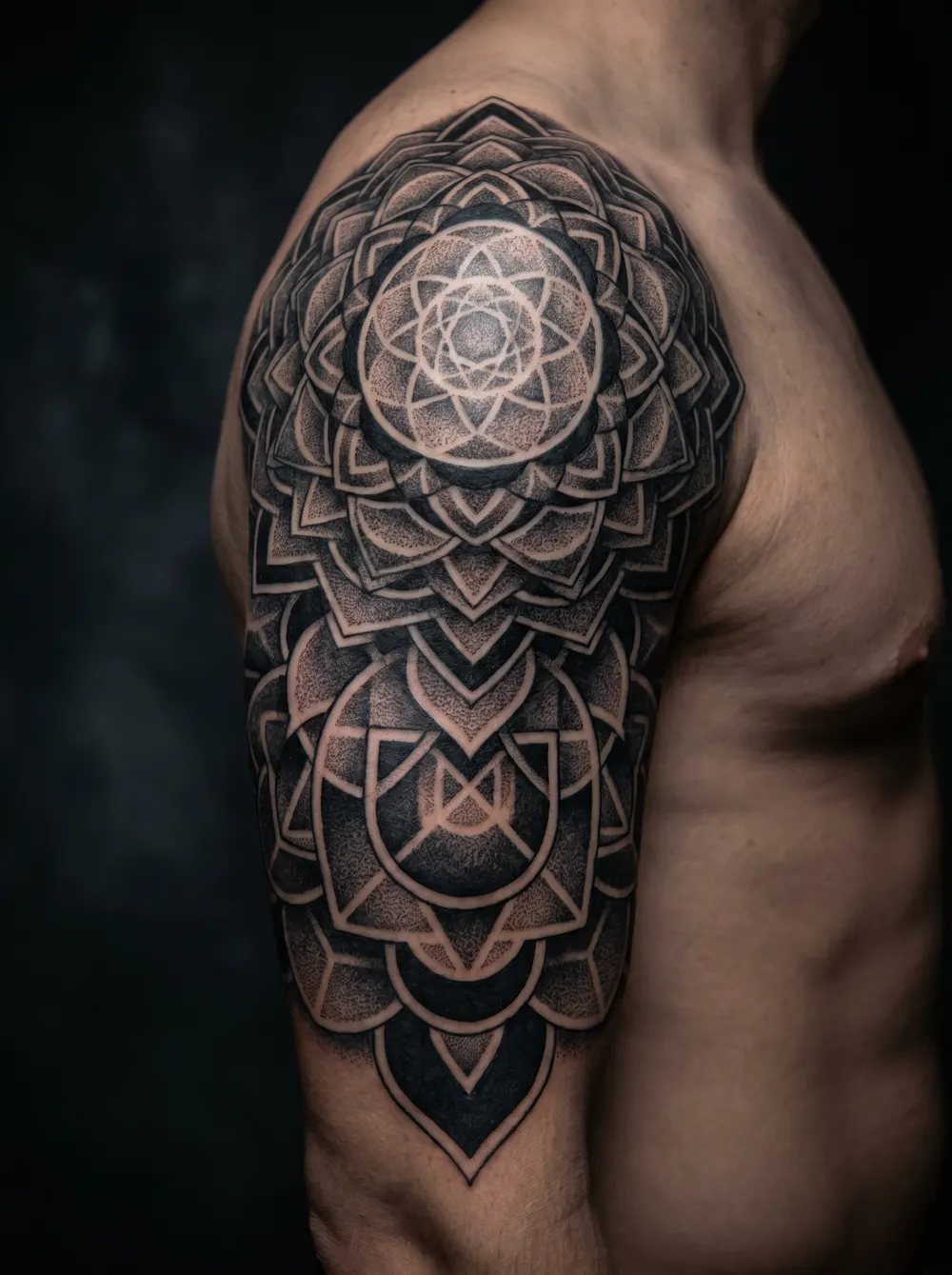
- It gets darker. Old ink shows through anything lighter than itself, so the replacement leans on deep blacks and heavy greys rather than mid-tones.
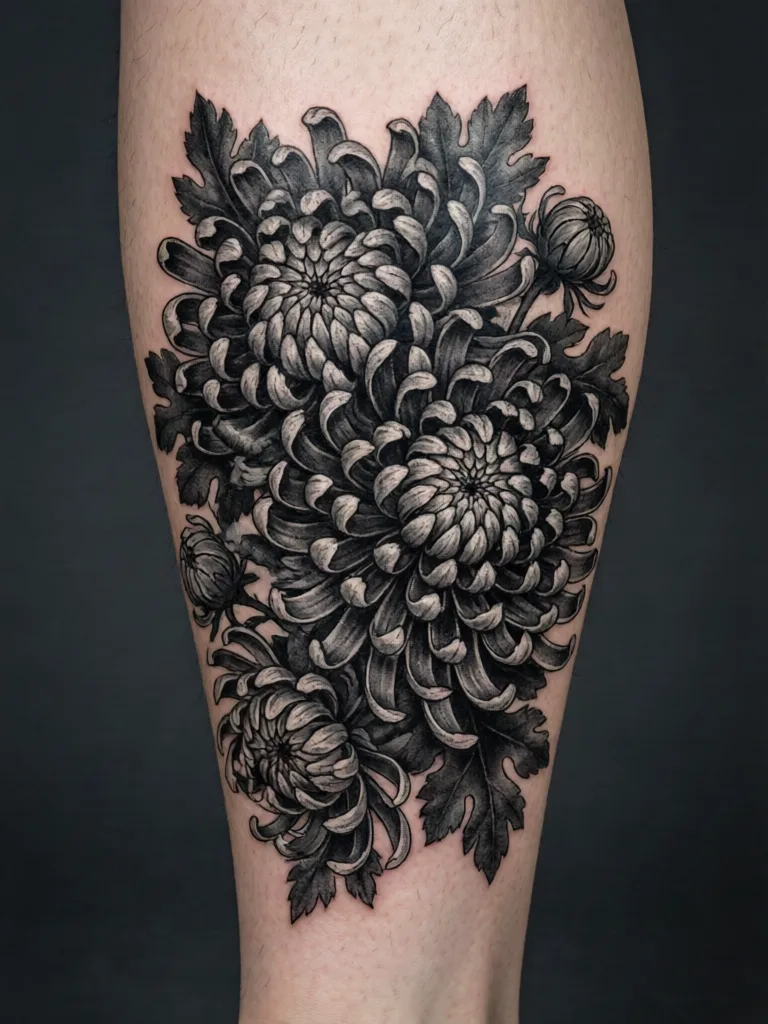
- It gets denser. Open skin inside a design is where an old line reappears, so cover-ups tend to fill their own negative space with leaves, scales, smoke, petals or shading.
- The style shifts. Blackwork, ornamental, floral and other busy organic styles cover well. Fine-line, minimalist, watercolor and single-needle work generally cannot, because they leave too much skin showing.
- The palette narrows. Color over old dark ink is unpredictable — what's underneath muddies whatever goes on top — so many cover-ups end up black-and-grey even when the client wanted color.
- The shape may not be the one you sketched. Artists design around the old tattoo's darkest areas, so the composition is partly dictated by what it has to hide.
None of that is a compromise in the sense of a worse tattoo — plenty of people end up with a piece they far prefer. But it is a real constraint, and it is the difference between the before and the after that photos are worst at communicating, because a photo of the after alone looks simply like a large dark tattoo, with nothing to tell you it was a negotiation.
The "after" you see online is usually fresh, not healed
This is the single biggest gap between expectation and result, and it has nothing to do with the artist's skill. A tattoo photographed the moment it is finished is at its most dramatic: the lines are crisp, the blacks are at their deepest, and the skin around it is flushed and slightly swollen, which makes the contrast look stronger than it will be. That is the picture that gets posted, because that is when the artist and the client are both in the room.
Over the following weeks the surface heals and the ink settles into the skin, and the piece reads a little softer and slightly lighter than it did on day one. On the surface that takes a couple of weeks; fully settling takes something more like a month. That is normal, it happens to every tattoo, and it matters more for a cover-up than for a fresh design — because a cover-up is relying on density and darkness to do a specific job. A healed cover-up is still an excellent cover-up. It just is not the day-one photograph, and comparing your three-week-old arm to someone else's day-one picture is the most common way people talk themselves into thinking something went wrong.
Cover-ups also commonly get a touch-up session once healed, to reinforce any areas that settled unevenly. If you see a flawless "after", you often cannot tell whether you are looking at one sitting or three.
How to read a before-and-after photo honestly
Before-and-after galleries are marketing, and that is not a criticism — it is just the category. A few habits make them far more useful:
- Check whether the two photos match. Different lighting, angle, distance or filter between the before and the after will exaggerate the change on its own, before any ink is involved.
- Look for a healed follow-up. An artist who posts the same piece again months later is showing you the part that is hard to fake — and it is the picture worth asking for at a consultation.
- Compare the footprint, not just the design. Hold the two images against each other and see how far past the original outline the new one runs. That size difference is the honest headline.
- Notice what the before actually was. A light, faded, small original is a much easier brief than a solid black one, so a spectacular result over faded ink does not predict yours.
- Assume you are seeing the best work. Nobody's portfolio is a random sample — which is precisely why an artist who will also show you a difficult case is worth more of your trust.
What a realistic "after" looks like for your tattoo
The most useful before-and-after is the one that starts from your own before. How dark, how saturated, how faded and how large the existing piece is decides how much bigger and heavier the new one has to be — that is the whole eligibility question, and "Will My Tattoo Cover Up?" below works through it factor by factor before you fall in love with a design. If the old ink is very dark, an artist may ask you to lighten it with laser sessions first, which meaningfully widens the range of "afters" available to you.
Two other expectations are worth setting now. First, a faint shadow of the original can sometimes remain visible under the right light, especially if the new design was not dark or dense enough for the job. That is called ghosting, and "Do Cover-Up Tattoos Show the Old One?" below is the post that explains it. Second, the design will keep changing slowly for years, as any tattoo does; a cover-up that only just barely hides the old piece has less margin for that than one that buries it comfortably.
FAQ
Does a cover-up tattoo look as good as a normal tattoo?
It can, but it is designed under a constraint a fresh tattoo does not have: it must be dark and dense enough to bury what is underneath. Judge a cover-up against other cover-ups rather than against an unrestricted design on blank skin.
How much bigger will my cover-up be than the original?
Commonly around one and a half to two times the size of the original, though that is a rule of thumb rather than a formula — a dark, solid old tattoo can push it further, and a faded one can keep it closer. Your artist sizes it against your specific tattoo, which is why the answer comes from a consultation rather than from a photo.
Why do cover-ups look different after healing?
Every tattoo settles as the skin heals, reading slightly softer and lighter than it did the day it was done — a couple of weeks on the surface and around a month to settle fully. Most before-and-after photos online show the day-one version, which is why healed results can look less dramatic by comparison.
Will the old tattoo still be visible in the after?
A well-planned cover-up should hide it. A faint shadow showing through, called ghosting, happens when the new design is not dark, dense or large enough for the old ink underneath. Why it happens and how artists prevent it is the subject of our post "Do Cover-Up Tattoos Show the Old One?".
Are before-and-after photos from tattoo studios reliable?
They are real work, but they are a curated portfolio rather than a representative sample, and they are usually shot the day the tattoo was finished. Ask to see a healed photo of the same piece and a case where the original was as dark as yours.
Related guides
Ombra Tattoo
Preview ink on your own skin