The Best Cover-Up Tattoo Designs to Hide Old Ink
Updated
The Ombra Tattoo team · Written by the Ombra product team — practical guidance for planning tattoo ideas, placement, and cover-up questions.
The best cover-up tattoo designs are dark, dense, and larger than the tattoo underneath — because a cover-up only ever adds ink, so the new piece has to be darker in value everywhere it overlaps. In practice the strongest choices are black-and-grey florals and roses, dragons and other large mythological pieces, heavy blackwork, geometric mandalas with dotwork, and — for the most stubborn old ink — a blackout band. What they share is deep shadow, flowing lines that route around the old design, and no bright gaps for the old tattoo to show through. Light, delicate, or single-color designs are the weakest cover-ups. The surest way to choose is to preview a few directions over a photo of your actual tattoo before you book.
Almost any tattoo can be covered — but only by a design that can go darker than what's already there. A cover-up adds ink, it never removes it, so the winning designs all solve the same problem: put enough shadow, density, and size over the old lines that they disappear. The motifs below are the ones cover-up artists reach for again and again, because each one is built to hide rather than just decorate.
What makes a design good at covering
Before the motif, three traits decide whether a design will actually cover. Get these right and almost any subject can work; get them wrong and even a beautiful piece will ghost.
- Value — the new design must be darker than the old ink wherever they overlap. Deep blacks and rich greys do the heavy lifting; pale, airy designs can't.
- Density — busy, layered work with little bright negative space hides old lines. Open, minimal designs leave gaps where the original peeks through.
- Size and flow — a cover-up is usually bigger than the original (commonly around one and a half to two times), so the artist has room to route new lines around the old ones and pack in covering shadow.
Dark florals and roses
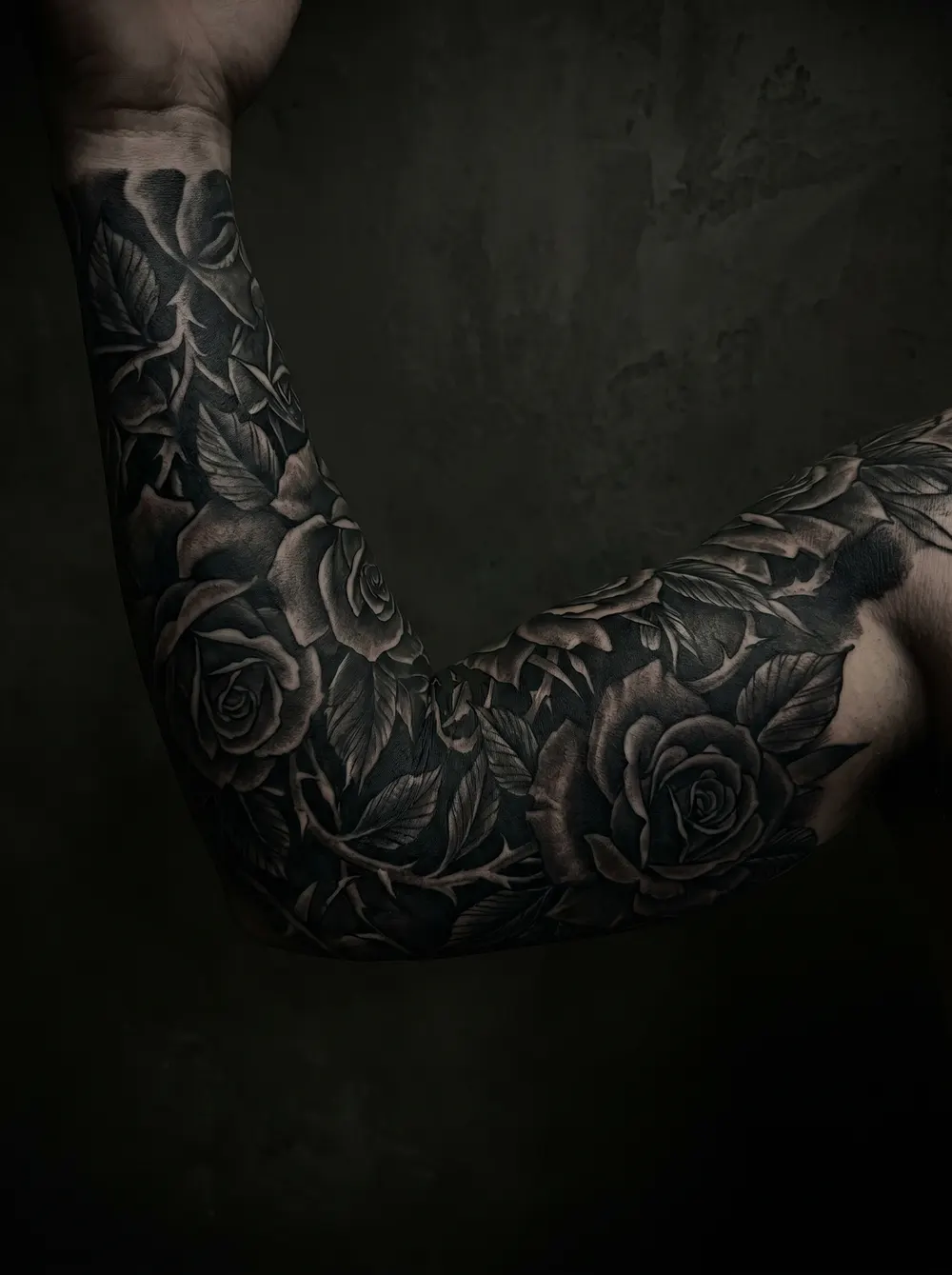
Black-and-grey florals are the workhorse of cover-ups, and for good reason. Overlapping roses, leaves, and stems create natural layers of shadow that swallow old ink, while the organic shapes flow around awkward lines instead of fighting them. Because petals and foliage read as intentional depth, an artist can push the blacks as dark as the cover needs without the piece looking heavy-handed. Florals also scale well — a small old tattoo can become a forearm cluster, a larger one a half-sleeve.
Dragons and large mythological pieces
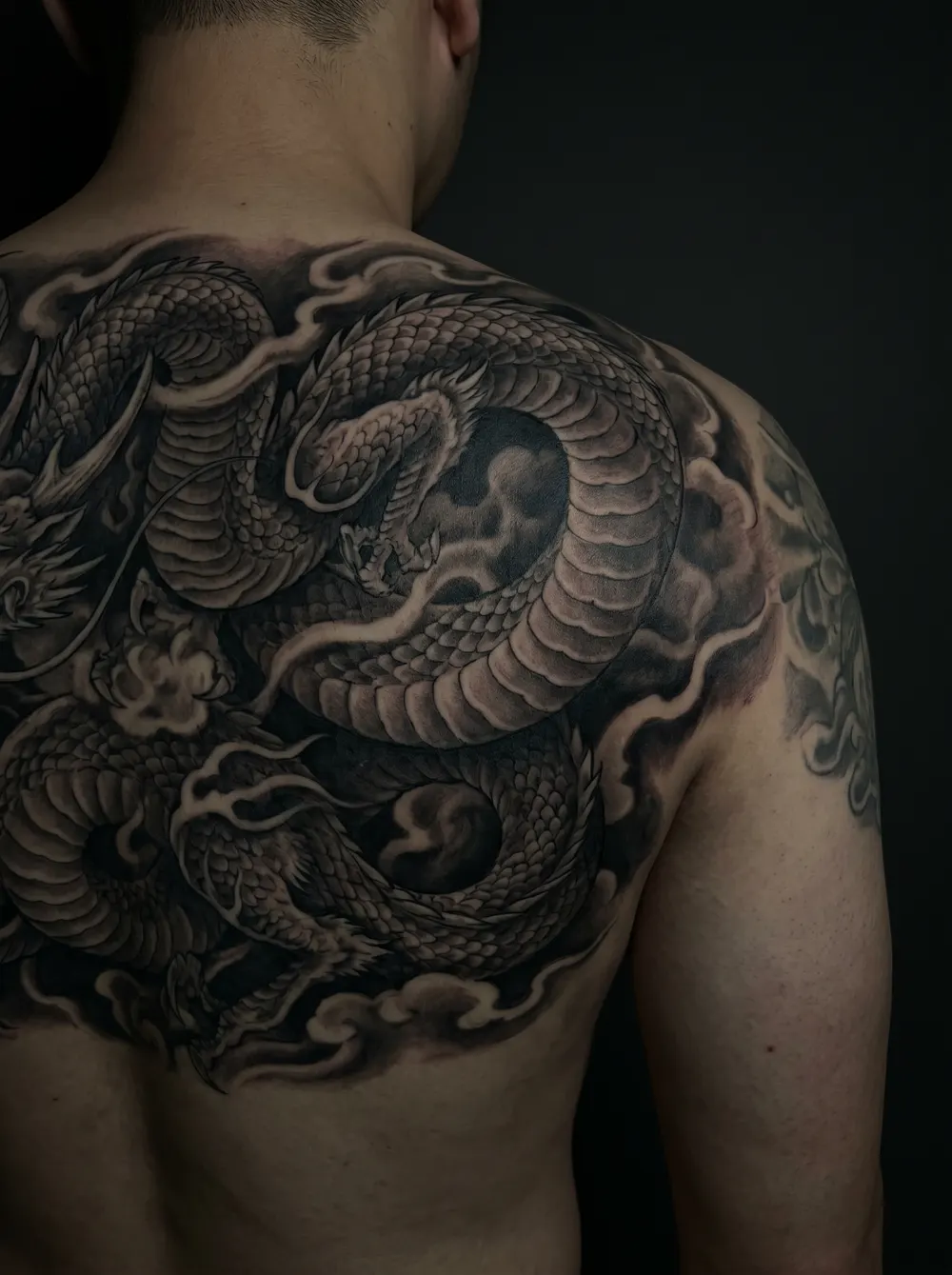
When the old tattoo is big or spread out, a large narrative subject earns its keep. Dragons, phoenixes, and koi bring coiling bodies, scales, and smoke or cloud fill that can be layered as densely as needed. The scale is the point: a back or full-sleeve piece gives an artist a big canvas and plenty of dark texture to bury whatever came before. These designs take more sessions, but they turn a coverage problem into a statement piece.
Heavy blackwork and ornamental patterns
Blackwork trades realism for pure coverage. Solid black fills, ornamental filigree, and bold graphic shapes conceal old ink with the least fuss, using negative-space shapes to carve a design out of the darkness rather than shading over it. It's an especially strong choice over medium-to-dark originals where subtle grey work would struggle, and the clean, modern look ages well.
Geometric mandalas and dotwork
Mandalas combine two things cover-ups love: symmetry and density. Tightly stippled dotwork and solid geometric anchors build a rich, even field of dark that hides old lines while looking deliberate and refined. They sit beautifully on rounded areas like shoulders and knees, and the repeating structure lets an artist add or subtract density exactly where the old tattoo needs the most hiding.
Blackout — the strongest cover of all
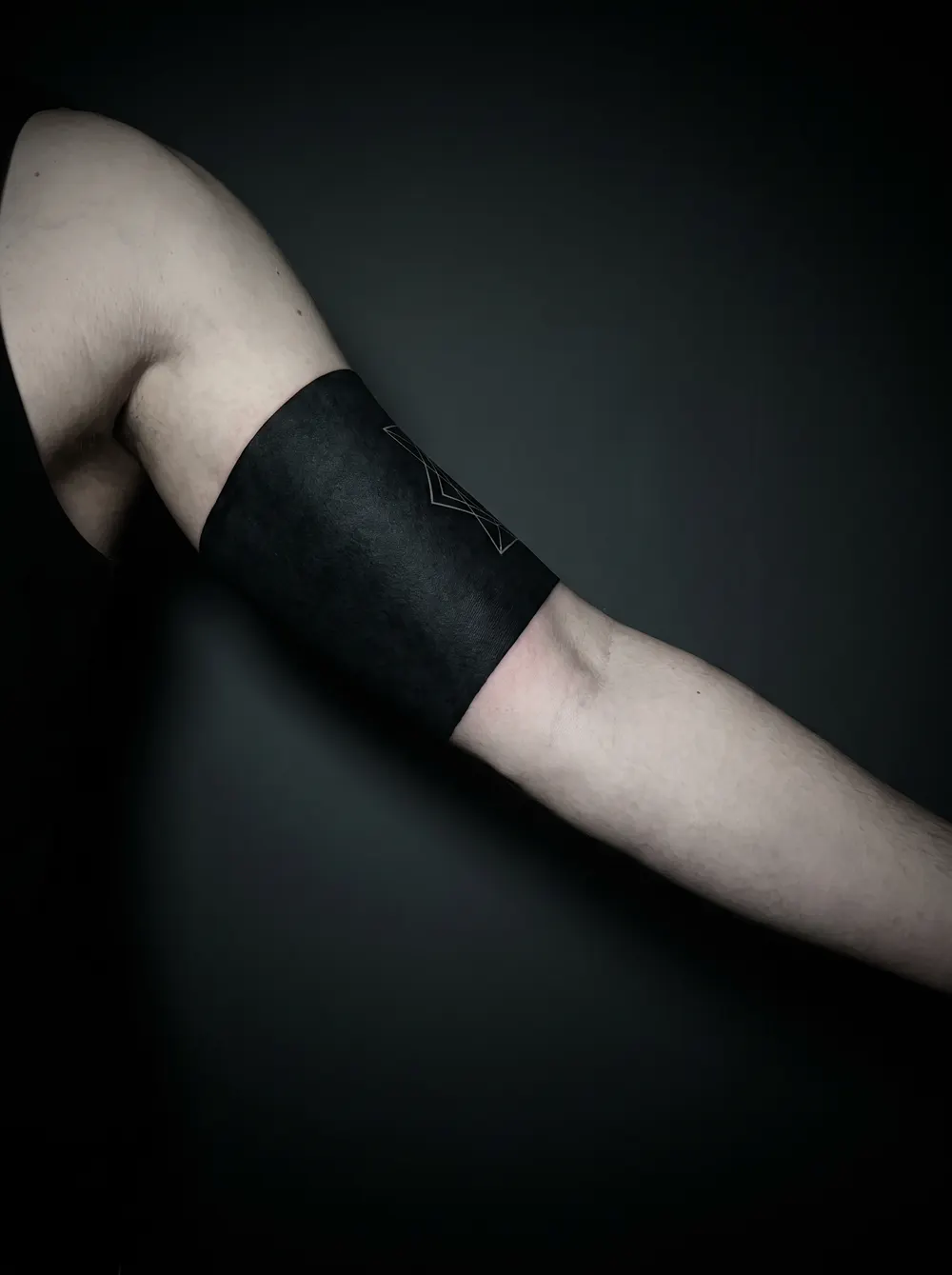
When the original is very dark, very dense, or a failed previous cover-up, a blackout is the most reliable answer: a solid band or field of deep black that simply erases everything under it, sometimes with a single fine negative-space motif left inside. It's bold and permanent-looking, so it's a decision to make with eyes open — but nothing else covers as completely.
Designs that usually don't cover well
It helps to know what to avoid. Fine-line and single-needle work, small delicate motifs, watercolor washes, and light single-color designs all lack the value and density a cover-up needs — they're wonderful on bare skin but tend to let old ink show through. If your heart is set on something light, the honest path is usually to fade the original with a few laser sessions first, which widens your options considerably.
How to choose the right one for you
The best design isn't the same for everyone — it depends on how dark your old tattoo is, its size, and where it sits on your body. A faded forearm name might disappear under florals; a solid black band might need a blackout. Rather than guess, preview a few of these directions over a photo of your actual tattoo in the Ombra Tattoo app before you book. If the old lines still show in the preview, you'll know the design has to go darker, denser, or larger — and you can bring the reference that works to your artist.
FAQ
What is the best design to cover up an old tattoo?
There's no single best design — the strongest cover-ups are dark, dense, and larger than the original. Black-and-grey florals, dragons, heavy blackwork, and mandalas cover most tattoos well; for very dark or stubborn ink, a blackout is the most reliable choice.
What color cover-up tattoo hides old ink best?
Black and deep grey. A cover-up has to be darker in value than what's underneath, so black-and-grey work covers far more reliably than light or single-color designs, which rarely go dark enough to block the old tattoo.
Do cover-up tattoos have to be bigger than the original?
Usually, yes. A cover-up is commonly around one and a half to two times the size of the original so the artist can route new lines around the old ones and pack in the shadow that does the covering.
Can a small or delicate design cover a tattoo?
Rarely on its own. Fine-line, watercolor, and small light designs lack the density to hide old ink. If you want one of those, fading the original with laser first is usually the honest route.
How do I know which design will actually cover my tattoo?
Preview a few cover-up directions over a photo of your real tattoo in the Ombra Tattoo app. If the old lines still show in the preview, the design needs to be darker, denser, or larger — better to learn that before you're in the chair.
Related guides
Ombra Tattoo
AI cover-up and design concepts