How to Cover Up a Name Tattoo
Updated
The Ombra Tattoo team · Written by the Ombra product team — practical guidance for planning tattoo ideas, placement, and cover-up questions.
To cover up a name tattoo you have three routes: swallow the lettering inside a new, denser design (a rose, ornamental panel, or dark motif placed over it), blast over it with bold new work, or laser-fade the letters first and then cover. Because names are usually small and linear, they're often easier to hide than a large old tattoo — but bold, solid, or blackletter lettering may need a session or two of fading first so no letters ghost through. Black-and-grey motifs with heavy shading erase letters best. Before you book, preview a direction over a photo of the old name in the Ombra Tattoo app to check the letters actually disappear.
An ex's name, an old nickname, a lettering piece you've simply outgrown — covering a name is one of the most common reasons people book a cover-up, and one of the more forgiving ones. Most names are small, thin, and made of readable lines rather than solid black, which gives an artist room to bury them. The whole job is choosing a route and a design dense enough that the letters don't peek back through once the new ink settles.
Can you cover up a name tattoo?
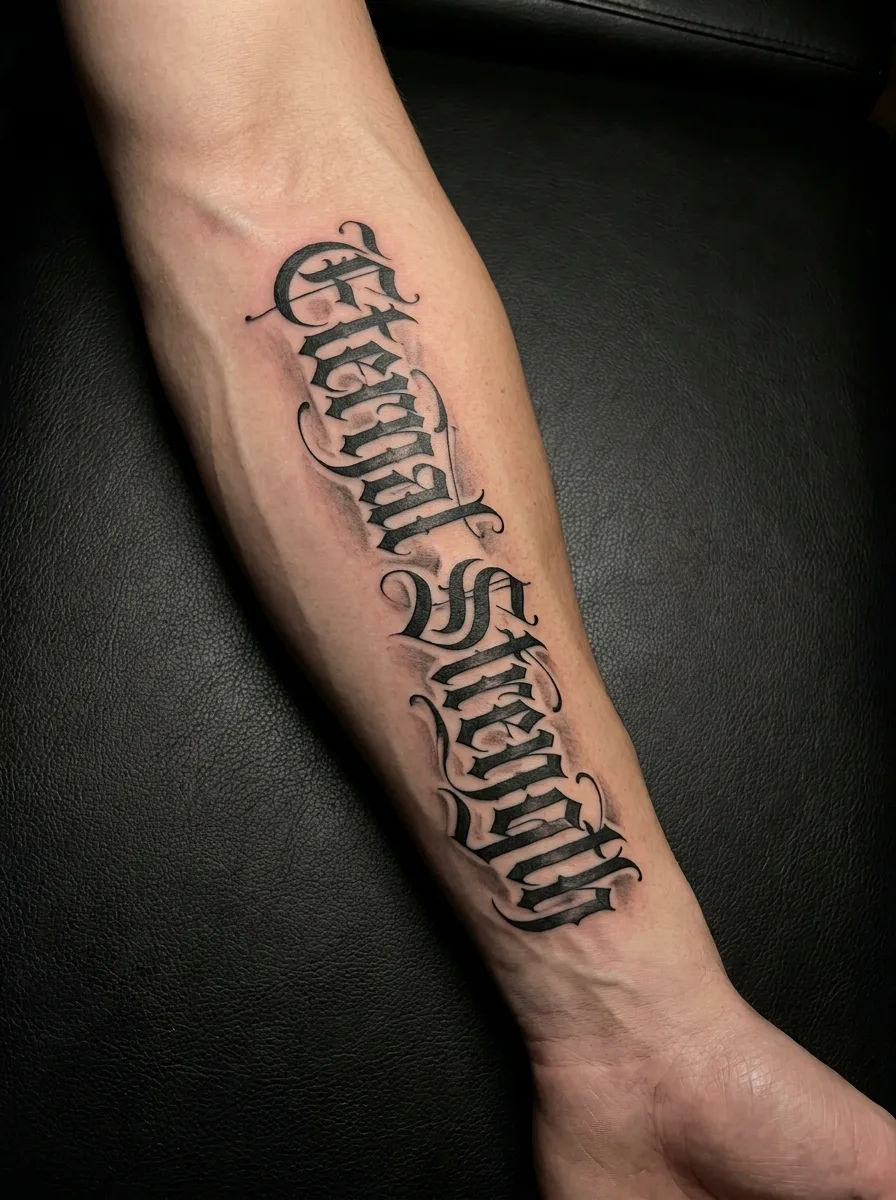
Almost always, yes. A name is usually a compact, linear tattoo, so a new design placed over it only has to be a little larger and darker to swallow the lettering. The friendly cases are fine-line script, faded older names, and small single words. The harder cases are bold blackletter, thick solid fonts, and anything with heavy shading or long cursive tails — there's more ink to hide, and if the letters are already close to black, the cover-up can't simply go darker without help. That's when fading the name first becomes part of the plan rather than a failure of one.
How to cover up a name tattoo, step by step
Photograph the old name honestly
Take a straight-on photo in bright, even daylight and look at three things: how dark the letters are, how large the whole word runs, and whether the strokes are thin script or thick solid font. A soft grey script gives your artist far more freedom than a fresh, solid blackletter piece.
Choose your covering route
There are three. Swallow the name inside a new motif — a rose, ornamental panel, or dark animal placed directly over the letters. Blast over it, layering bold new work across the whole area so the old word reads as texture. Or laser-fade the name over a few sessions first, then cover a lighter ghost. Which one fits depends on how bold and dark the lettering already is.
Pick a design dense enough to erase the letters
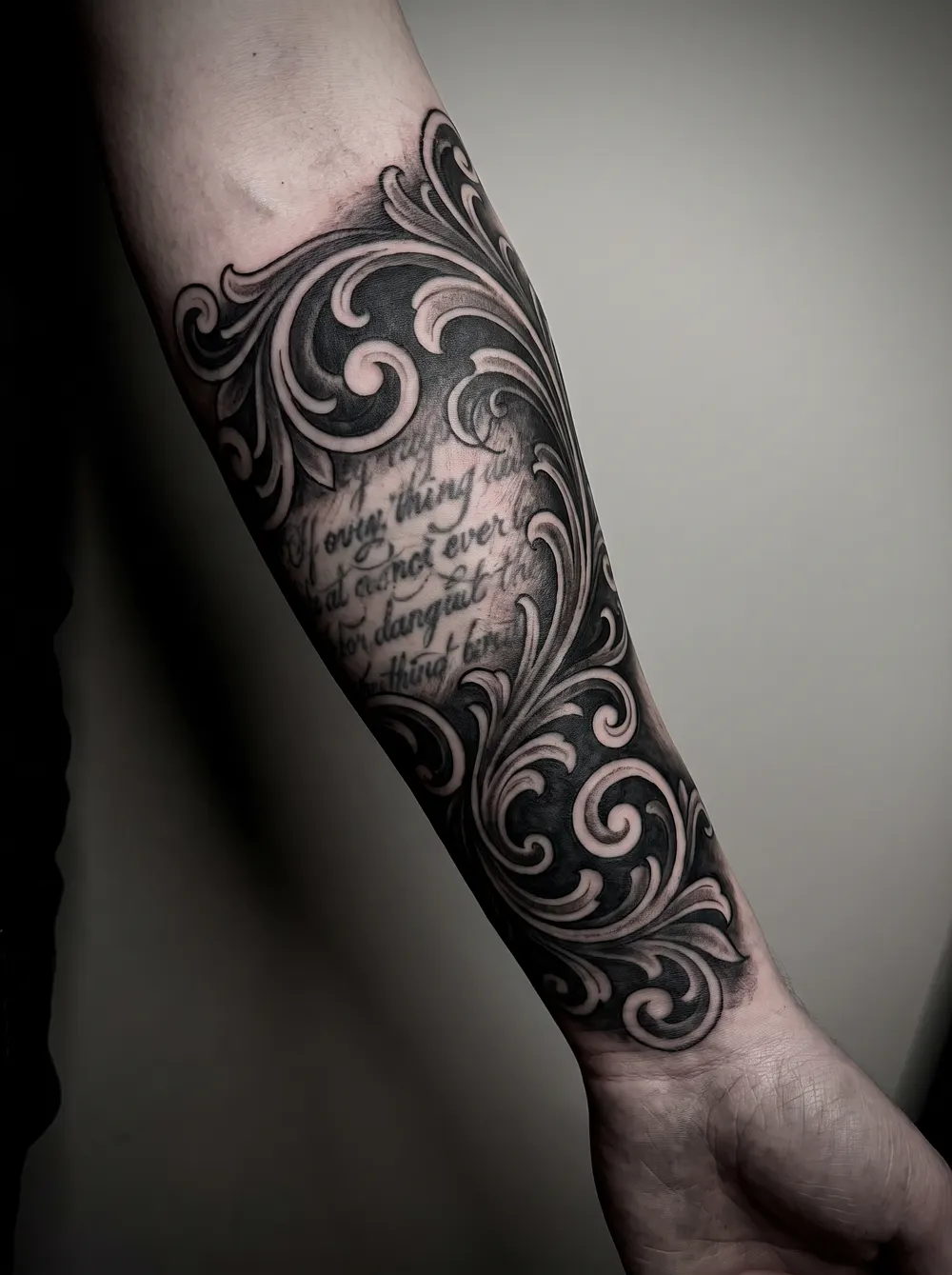
Cover-ups live and die on density. Organic, shadow-heavy motifs — roses, florals, ornamental scrollwork, snakes, mandalas — hide lettering because their dark areas fall over the strokes instead of leaving clean gaps where a letter could show. A blackout band or solid blackwork is the surest erase when a motif won't reach. As a rule, the new piece should run noticeably larger than the word it's covering.
Fade the name first if it's bold or solid
If the lettering is thick, blackletter, or heavily saturated, a few laser sessions to lighten it will give you a much cleaner result. You don't need it gone — just faded enough that the cover-up isn't fighting a wall of solid black. Laser fading happens over multiple sessions spaced a couple of months apart, so build that time into your plan.
Preview it over the old name
Before you commit, upload a photo of the name in the Ombra Tattoo app and see a cover-up rendered over your actual skin — not a stock arm. It's the fastest way to judge whether a motif is dark and busy enough to bury every letter, and you walk into the studio with a clear reference instead of a vague idea.
Take it to a cover-up specialist
Not every talented tattooer loves cover-up work, and covering lettering is its own skill — the artist has to read where each stroke sits and route the new design so the darkest areas land on the letters. Look through portfolios for before-and-after name cover-ups specifically, and plan for a possible touch-up once it heals.
Which designs cover a name best
- Roses and dark florals: layered petals and leaves drop shadow right over the strokes — a classic way to bury a short name.
- Ornamental blackwork and scrollwork: flowing filigree and solid fills swallow letters without looking like a patch.
- Blackout or a solid band: the guaranteed erase when the lettering is too bold for a motif to hide.
- Snakes, dragons, and vines: a long, winding body routes along a word that runs down the arm.
- Go darker and denser than the letters — value does the covering, not just a different color.
The most common regret with a name cover-up isn't the new design — it's going too small or too light because the old word felt like so little ink. It usually needs more than you'd expect. When a good specialist pushes you bigger and darker, that's exactly what keeps an old letter from resurfacing a year down the line.
Preview a name cover-up on your skin → Get the appName cover-up directions to start from
If your name is thin script, a rose or ornamental piece placed over it is the softest, surest route. If it's bold or blackletter, plan on a laser-fade first or lean toward a blackout band that erases the area outright. Browse name cover-up ideas by design, then test your favorite over a photo of the old lettering before you commit to a session.
FAQ
What's the best way to cover an ex's name?
Three routes work: swallow the name inside a new design like a rose or ornamental panel, blast over it with bold new work, or laser-fade the letters first and then cover. Which is best depends on how dark and large the old lettering is — thin script covers directly, while bold blackletter usually wants a fade first.
Do you have to remove a name before covering it?
Not always. Many names are covered directly with a dense, darker design, because the lettering is small and linear. Only bold, thick, or heavily saturated fonts usually need a session or two of laser fading first so no letters show through the new ink.
Can a small tattoo really cover a whole name?
A single tiny motif often can't, but a name doesn't need a huge cover-up — just one that runs a bit larger and darker than the word. A rose, a cluster of leaves, or an ornamental panel sized over the lettering is usually enough for a short name.
Will the old name show through later?
A well-designed cover-up shouldn't, but bold or solid old lettering can sometimes ghost back as the new ink settles over the years. Fading the name first and choosing a dense, dark design are the two best ways to prevent it.
How do I know a design will hide my name before I book?
Preview it over a photo of the old name in the Ombra Tattoo app. If any letters still peek through in the preview, go darker, denser, or larger before you sit down with your artist.
Related guides
Ombra Tattoo
AI cover-up and design concepts