Hand Tattoo Cover Up
Updated
The Ombra Tattoo team · Written by the Ombra product team — practical guidance for planning tattoo ideas, placement, and cover-up questions.
A hand tattoo cover up can be possible, but the hand gives an artist less room, less privacy, and less tolerance for delicate choices than many other placements. A successful direction usually has to respond to the old ink's darkness, its position across the hand or fingers, and the amount of nearby skin available to work with. Because hands are exposed, move constantly, and can wear differently over time, an in-person assessment from an artist experienced with hand work is the practical next step before treating any design as a plan.
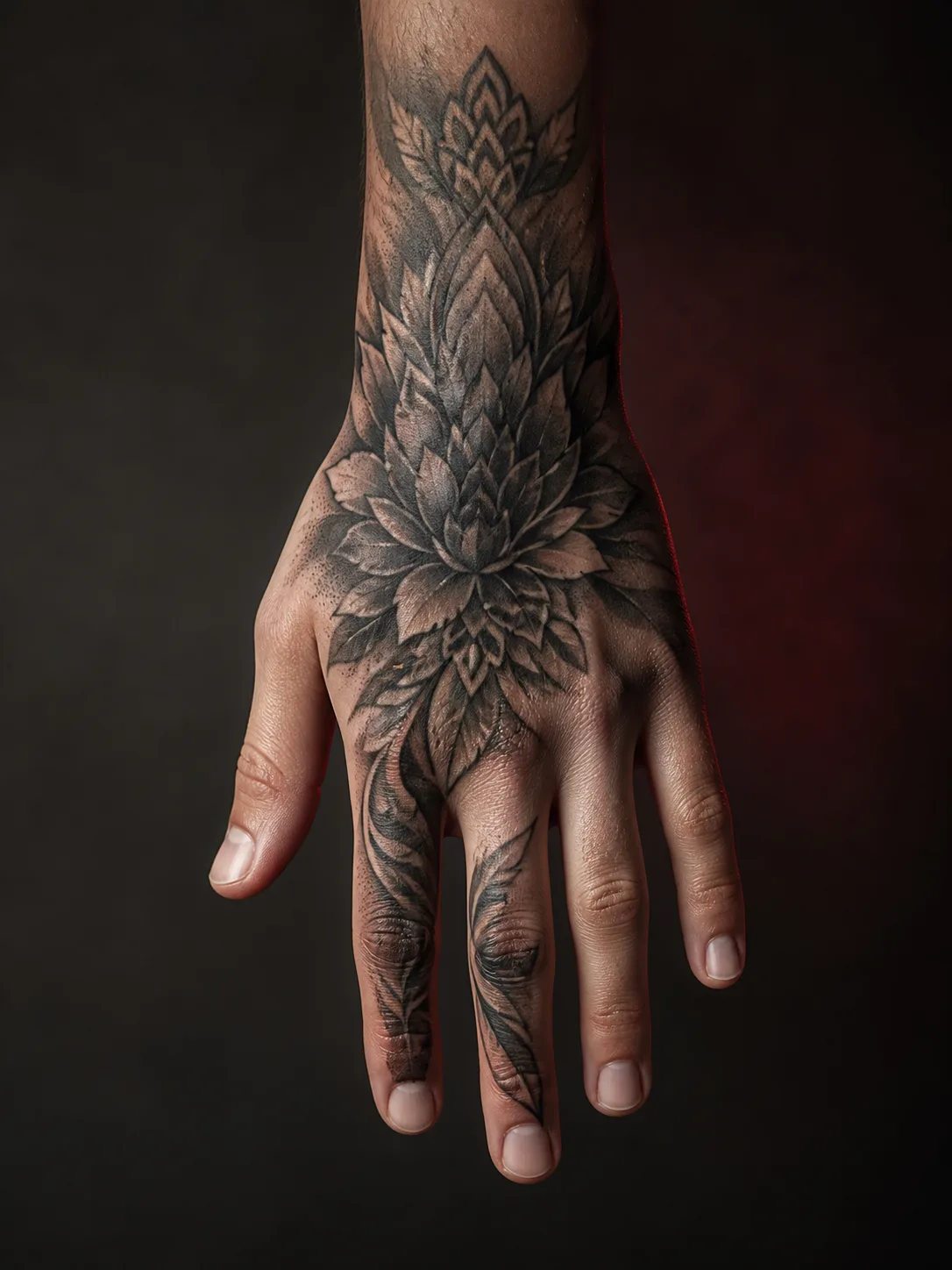
Hands and fingers make every cover-up decision more visible. A mark on the back of the hand is hard to ignore in daily life, while a finger tattoo may sit beside knuckles, joints, and little usable skin. That does not automatically rule out a cover-up. It does mean that the usual advice to simply make the new tattoo bigger and darker has a much tighter boundary here than it would on a forearm, shoulder, or thigh.
The useful question is not just, "What could hide this?" It is, "What can sit naturally on this hand, cover enough of the old work, and still be a direction I want to wear in a very public place?" Answering that question early helps you avoid taking a delicate reference image to a consultation when the old tattoo may call for more coverage, a different shape, or a larger area that extends beyond the original mark.
Why hands and fingers are a harder cover-up placement
Room is the first constraint. Cover-ups often use surrounding skin to break up old lines with shadow, texture, or a broader composition. On a hand, the original tattoo may be close to the fingers, wrist, or edge of the palm, leaving fewer directions in which a design can expand. On fingers, that canvas becomes narrower again. A design that looks substantial in a reference photo can become cramped once it has to work around the actual shape and size of your hand.
Visibility is the second constraint. Hands are present in conversations, photos, work, and everyday tasks. A cover-up may be the right personal choice, but it is worth considering how much darkness, coverage, or extension onto the fingers you are comfortable seeing all the time. This is not a reason to avoid the placement; it is a reason to choose the scale intentionally instead of discovering its impact after the appointment.
The third constraint is wear. Hands are exposed to daylight, washing, friction, and frequent movement. Fingers also bend and stretch around joints. Those conditions can make retention and the long-term appearance less predictable than in a more protected area, especially where fine detail needs to do the covering. An artist who regularly works on hands can look at the exact location and explain which parts of the idea are likely to be more demanding to maintain.
What to assess before choosing a direction
Start with the old tattoo itself rather than a favorite replacement image. Its darkness, line weight, age, and shape all affect the conversation. So does whether the old work is isolated in one small area or runs across more than one finger, over knuckles, or down toward the wrist. A dark, compact mark and a light, spread-out piece may need very different approaches even when they occupy similar space.
- Map the darkest parts: these are often the areas that most constrain the new composition, so take clear photos in even light for a consultation.
- Notice the usable border: consider whether you are open to a design that expands toward the wrist or across more of the hand, rather than stopping exactly at the old outline.
- Separate coverage from style: decide which matters more if they conflict. A light, very fine design may be a poor match for a dark old tattoo even if it is your favorite aesthetic.
- Think about daily visibility: decide in advance whether coverage on one or more fingers, or a stronger back-of-hand presence, fits your work and personal life.
Set expectations for coverage and retention
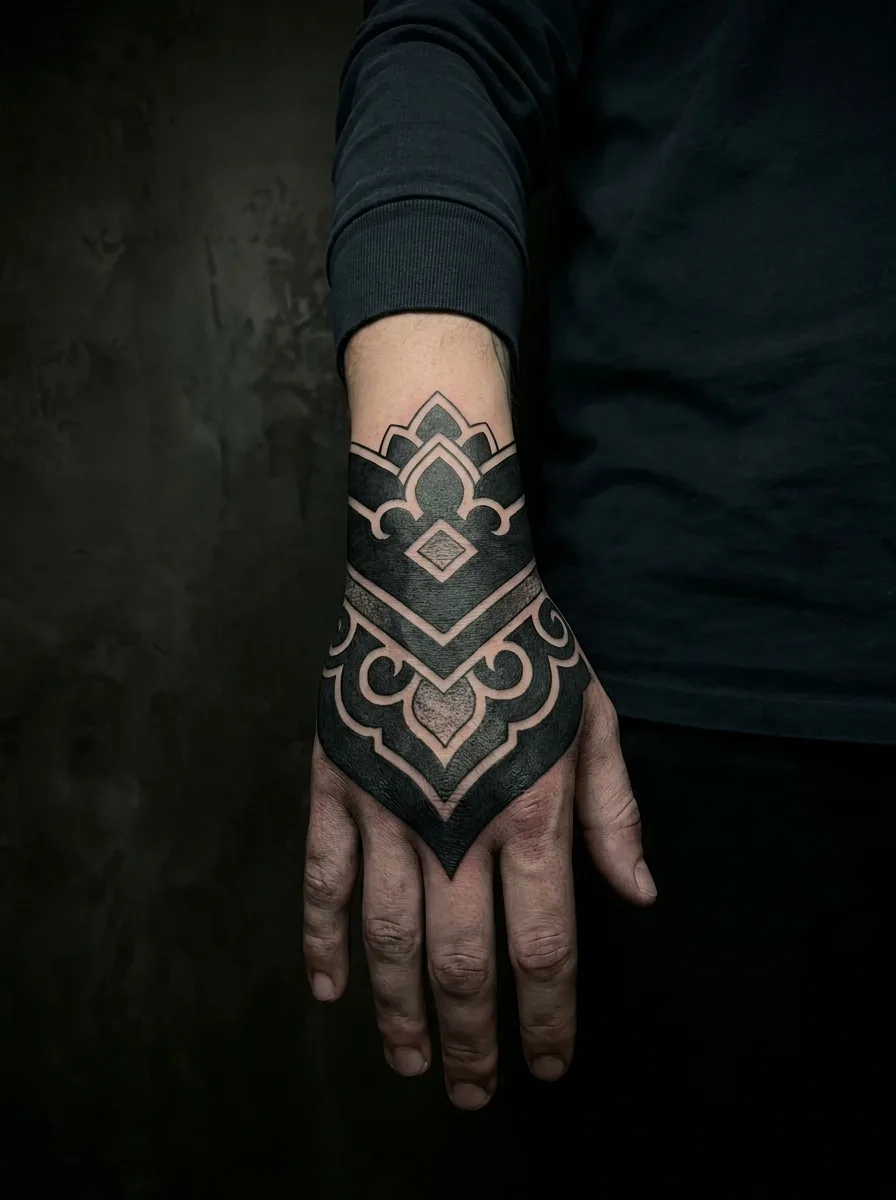
A cover-up does not have to make every trace of an old tattoo disappear to be successful. The realistic goal may be to redirect attention with a composition that reads as intentional, rather than perfect invisibility. Be especially careful with promises based only on a fresh mockup or a single photograph: the original ink, the new design, and the way a hand is seen in motion all matter.
This is also where the hand's exposure matters. The same detail can look different after time, sunlight, washing, and day-to-day use. Fine gaps, light shading, and tiny elements can be less forgiving when they must also disguise existing ink. That does not mean every hand cover-up needs to be solid black or that a touch-up is certain. It means your artist should set expectations for your specific placement instead of offering a universal outcome.
Choose an approach with an artist, not from a gallery alone
Bring the artist a clear photo of the existing tattoo, the approximate history of any prior work in the area, and a few directions you genuinely like. Ask them where the old ink is likely to drive the design, whether extending the composition would improve the result, and whether they see a reason to consider fading before a cover-up. A strong consultation may change your initial idea. That is useful information, not a failure of the idea.
It is also reasonable to ask for examples of healed hand work and to compare more than one artist's view when the tattoo is dark, spread over fingers, or already covered once. Look for someone who can explain trade-offs plainly: how the hand's shape influences the composition, why a requested detail may not be ideal, and what they cannot know until they see the area in person. The right choice is not the most confident promise; it is the direction whose limits you understand.
Preview a hand cover-up on your skin → Get the appUse an AI preview to prepare a better consultation
The Ombra Tattoo app is free to download and can help you preview a cover-up direction on a photo of your own hand before you book. Try it to compare how a darker or more extended composition feels at hand scale, then save the direction that helps you explain your preferences. Treat the result as a conversation starter: it can make the trade-offs easier to see, but it cannot replace an artist's judgement, a stencil, or a commitment to a final result.
FAQ
Can a hand tattoo be covered up?
A hand tattoo may be coverable, but feasibility depends on the old ink, the available surrounding skin, and how far the new design can reasonably extend. A hand-experienced artist needs to assess the exact tattoo before confirming an approach.
Why are hand tattoos difficult to cover?
Hands offer limited space to enlarge a design, are highly visible, and experience frequent exposure, friction, washing, and movement. Those constraints can make a dark old tattoo and delicate new detail harder to balance than they would be on a larger, more protected placement.
Can finger tattoos be covered up?
Finger tattoos can be more constrained than back-of-hand tattoos because the canvas is narrow and crosses moving joints. Whether a cover-up is suitable depends on the old tattoo's position and darkness, the adjacent skin available, and the artist's assessment of the specific finger.
Will a hand tattoo cover-up fade?
No one can predict exactly how an individual hand cover-up will change. Hands are exposed to frequent use, sunlight, washing, friction, and movement, so ask an experienced artist how those factors affect the proposed placement and detail rather than relying on a guarantee.
Related guides
Ombra Tattoo
AI cover-up and design concepts