cover up tattoo size
Updated
The Ombra Tattoo team · Written by the team behind the Ombra cover-up preview app — we look at real cover-up cases every day.
A cover-up tattoo usually needs to extend beyond the old tattoo, but there is no reliable universal size multiplier. The required footprint depends on the old outline, darkness, color, density, location, surrounding clear skin, and the new subject. A specialist may need extra room to redirect the silhouette and place darker structure strategically; selective fading can sometimes reduce those constraints.
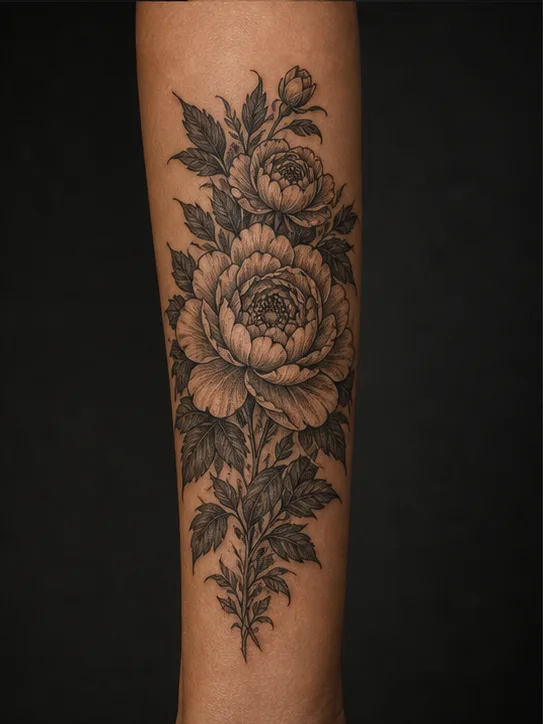
Size is one of the main tools in a cover-up because a new design cannot treat the old boundary as if it were blank skin. If the replacement ends exactly at the old edge, every curve and corner has to cooperate with that outline. Extra space lets the artist build a new silhouette, move the focal point, use clean skin for contrast, and make the original tattoo a supporting part of a larger composition.
Why cover-ups often become larger
- The new outer shape needs to feel intentional rather than tracing an old rectangle, name, or symbol.
- Dark old sections must land inside areas that can carry shadow, texture, solid black, or deep color.
- Clear surrounding skin provides negative space and lighter passages that keep the new tattoo readable.
- A larger subject can distribute visual weight instead of concentrating every coverage decision in one dark patch.
- Placement and body movement may require extending the composition along the limb rather than simply widening it.
The old tattoo determines the starting footprint
Measure more than width and height. Photograph the whole placement and note whether the old work has long lines, isolated dark blocks, empty gaps, color, uneven fading, or a shape that wraps around the body. A pale small tattoo with broken lines gives a different starting point from a dense black band of the same dimensions. Scarring, repeated touch-ups, and earlier cover-up attempts also need in-person inspection.
Shape matters as much as total area
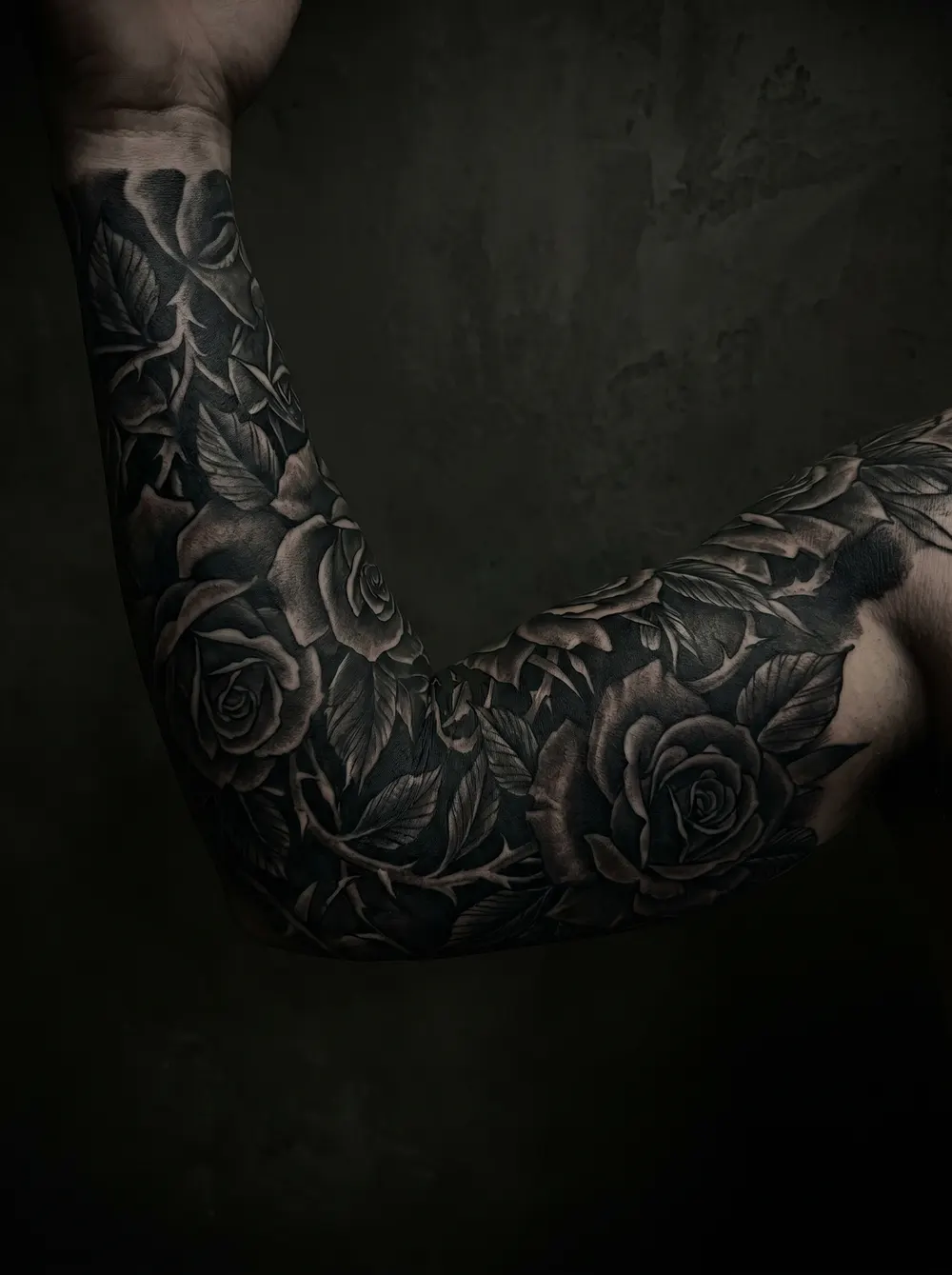
Two designs can cover the same number of square centimetres and solve completely different problems. A long narrow tattoo may need a vertical subject that carries the eye past both ends. A circular mark might sit inside a flower, animal head, ornamental medallion, or another centered form. A wraparound band can demand a composition that connects around the limb. The artist needs room in the directions where the old silhouette is most restrictive, not an arbitrary border on every side.
The new motif also sets a minimum readable size. Faces, lettering, feathers, scales, and layered botanical work need enough spacing for the essential shapes. Enlarging a design is not useful if it only adds tiny decoration around the same crowded center. Ask the artist what the added area accomplishes: a new outline, a place for negative space, a darker anchor, or a smoother transition into clear skin.
When fading can change the size conversation
Selective laser fading may reduce the dominance of a line or dark block that otherwise controls the entire replacement. That can sometimes allow more open space, a different focal point, or a less dense composition; it does not guarantee a small cover-up or complete disappearance. Ask a cover-up artist which areas create the design constraint, then discuss suitability, risks, treatment course, and recovery with a qualified laser provider.
Compare a realistic cover-up footprint on your photo → Get the appSet a boundary without designing against yourself
Before the consultation, mark the largest area you would genuinely accept and identify any nearby tattoos or landmarks that must remain untouched. Treat this as a boundary for discussion, not a finished outline. If the workable design exceeds it, the honest choices are to change the subject, simplify the goal, consider fading, seek another informed opinion, or decide not to cover the tattoo yet—not to force the same complex idea into an area that cannot support it.
Ombra Tattoo is free to download and can help you compare a few approximate cover-up sizes on your own photo. Keep the unedited image beside every preview and view the result from normal distance. The final footprint should be measured and drawn by the artist who can see the old ink and body in person.
FAQ
How much bigger should a cover-up tattoo be?
There is no dependable universal ratio. The required extension depends on the old shape, darkness, color, gaps, placement, new motif, and where the artist needs clean skin or darker structure.
Can a cover-up be the same size as the old tattoo?
Sometimes a particular shape may allow limited expansion, but matching the old boundary removes many composition options. A specialist must inspect whether the new silhouette can work.
Does a larger cover-up have to be very dark?
No, not uniformly. Larger area can create room for contrast and negative space, while darker passages are placed where old pigment demands them.
Can laser fading make the cover-up smaller?
It may reduce a specific constraint and open lighter options, but it does not guarantee a smaller design. Get separate advice from a cover-up artist and qualified laser provider.
Can an app calculate my exact cover-up size?
No. A preview can compare rough footprints, but an artist must inspect and measure the real tattoo, skin, placement, and design needs.
Related guides
Ombra Tattoo
Preview ink on your own skin