cover up tattoo consultation
Updated
The Ombra Tattoo team · Written by the team behind the Ombra cover-up preview app — we look at real cover-up cases every day.
Bring clear photos of the old tattoo, a rough size and placement goal, two or three style references, and a written list of questions to a cover-up consultation. Ask the artist what must become larger or darker, whether fading would open better options, how many tattoo sessions they expect, and what their quote includes. Leave with a direction you understand—not a promise based only on a quick glance.
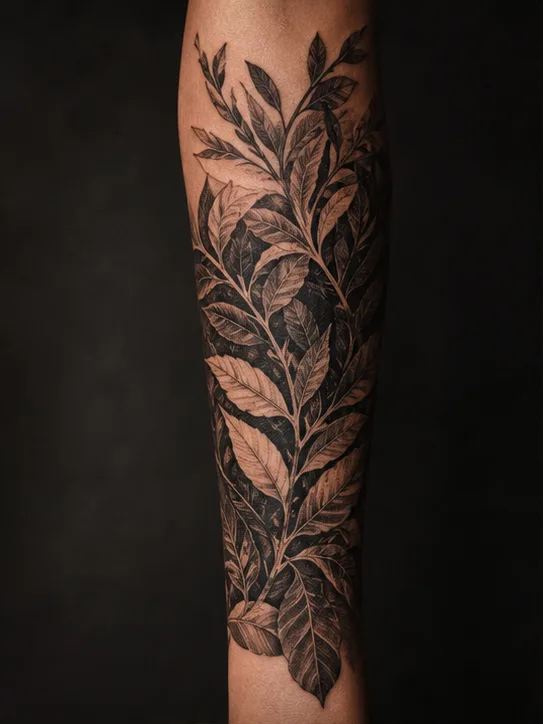
A cover-up consultation is where a hopeful idea becomes a workable tattoo plan. The artist has to read the old lines, saturation, scars, placement, and the shape of the body before deciding what can sit over them. That makes the meeting different from ordering a new tattoo on clear skin. You are not trying to persuade someone that a tiny pale design will hide a dark piece; you are trying to find the strongest solution that still feels like yours.
What to prepare before the meeting
Photograph the tattoo in indirect daylight, straight on, with the whole surrounding body area visible. Add a closer image for line and color detail. Avoid filters, portrait blur, strong shadows, or a pose that stretches the skin, because the artist needs an honest view of the ink. If the tattoo wraps around a limb, take a small set of overlapping angles so no section disappears around the side.
- Write down when the old tattoo was done and whether it has been retouched, covered before, or treated with laser.
- Choose two or three references for mood, line weight, shading, and composition—not another artist's tattoo to copy exactly.
- Mark the largest area you would comfortably accept. Most cover-ups need more room than the old tattoo, so this boundary matters.
- Decide which qualities are essential and which are flexible: subject, color, visibility, density, or keeping nearby tattoos untouched.
- Bring your normal availability and budget range so the artist can discuss a sequence you can realistically finish.
A step-by-step consultation checklist
Show the old tattoo without minimizing it
Let the artist inspect it in normal light and from the angles that matter. Point out raised areas, sensitivity, or previous work, but do not diagnose the skin yourself. If anything is not fully healed or causes concern, ask whether the tattoo should be postponed and whether medical advice is appropriate.
Explain the outcome, not a fixed drawing
Describe what you want to stop seeing and what you want the new piece to feel like. A good cover-up artist may rotate, enlarge, simplify, or replace your first motif because the old lines dictate the composition. Give them room to solve that problem while protecting the meaning that matters to you.
Ask what must become larger, darker, or different
Request a plain-language explanation of where the old tattoo will sit inside the new design. Ask which areas need solid contrast, which can use texture, and where negative space is still possible. This exposes whether the plan is structural or simply a dark picture placed over the top.
Discuss direct coverage versus fading
Ask whether the artist would work directly over the tattoo or prefer selective laser fading first. Fading is not automatically required, and it adds time and expense, but it can create more design freedom when old black areas are too dominant. Compare the trade-off rather than assuming one route is always better.
Confirm sessions, pricing, and what is included
Find out whether the quote is hourly, daily, per session, or fixed; whether drawing time, deposits, and touch-ups are included; and how the work might be divided. The answer is an estimate, not a guarantee, but it should make the scope understandable enough to compare with another proposal.
Review the next decision before paying
Clarify what you will see before the appointment, how many revisions are normal, whether the final drawing is revealed on the day, and what happens if the direction changes. Do not pay a deposit until you understand the artist's process and cancellation terms.
Questions that reveal an artist's cover-up experience
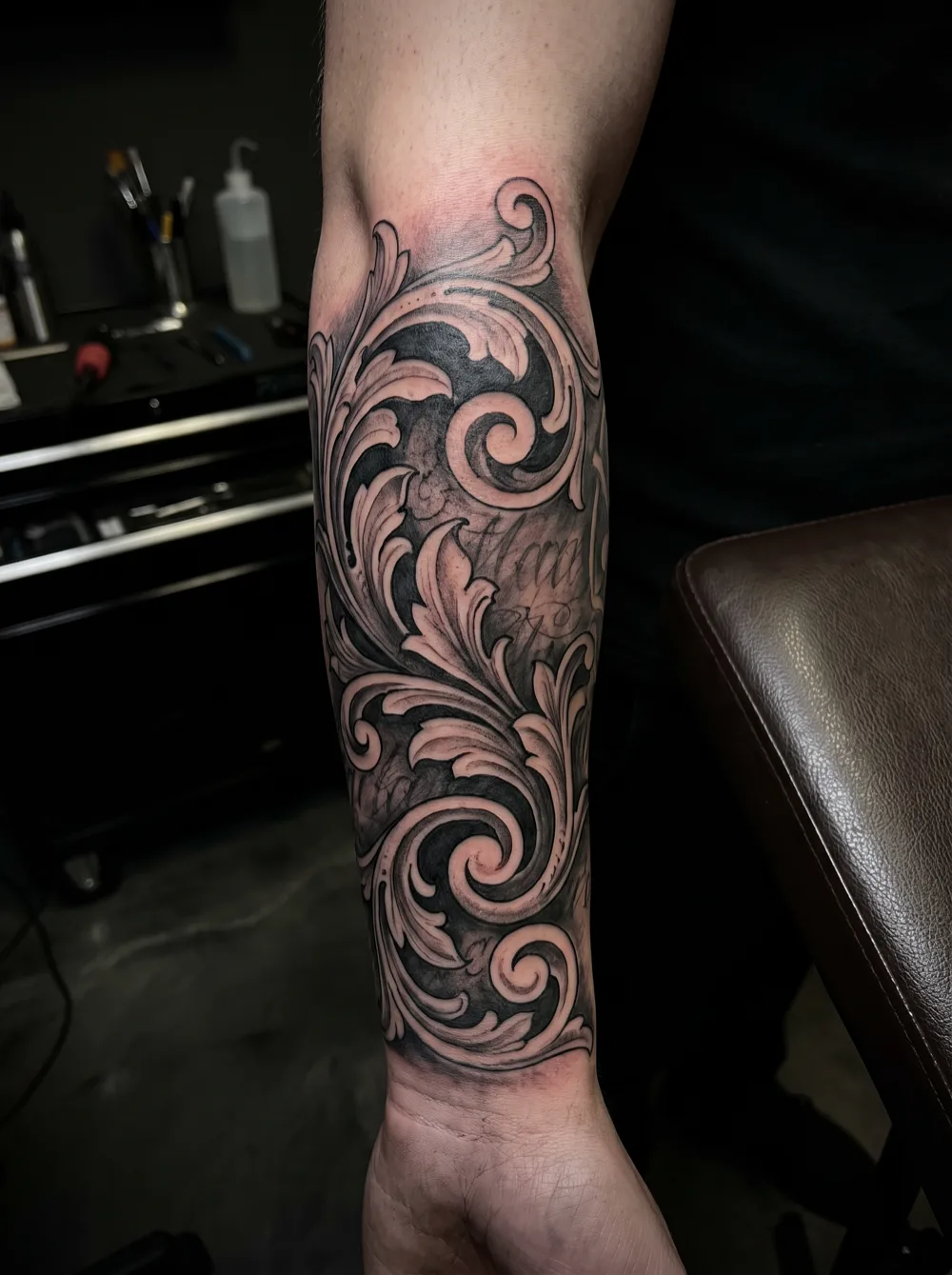
Ask to see healed cover-ups, not only fresh studio photographs. A fresh tattoo can look uniformly dark and polished before it settles; healed work shows whether the old lines return, the contrast stays readable, and the larger composition still makes sense. Ask what made one example difficult and why the artist chose that motif. A thoughtful answer is more useful than a large portfolio with no explanation.
Also notice what the artist refuses. Someone who explains that your requested scale is too small, that pale color cannot erase black, or that a skin concern needs time is protecting the result. Pressure to book immediately, certainty without examining the tattoo, no healed examples, or a plan that is simply a solid dark patch are reasons to pause and seek another opinion.
Preview a cover-up direction before your consultation → Get the appWhat a useful outcome looks like
You do not need to leave with finished art. You should leave knowing the likely footprint, the design family, whether fading is part of the plan, how the sessions and quote work, and which decision comes next. Write those points down while the meeting is fresh. If two artists propose different routes, compare their reasoning and healed work rather than choosing only by price or the darkest mock-up.
Ombra Tattoo is free to download and can place a generated direction on a photo of your own skin. Try a few realistic sizes before the meeting and bring the strongest option as a conversation reference. The final design still belongs with the artist who can adapt it to the old ink and the body in front of them.
FAQ
What should I bring to a cover-up tattoo consultation?
Bring clear unfiltered photos, the old tattoo's history, a few style references, your acceptable size boundary, practical availability, and written questions about fading, sessions, pricing, revisions, and healed results.
Should I have a finished cover-up design before the consultation?
No. Bring a clear direction and references, but let the artist redesign the composition around the old lines, saturation, placement, and the amount of space the cover-up needs.
How can I tell whether an artist is good at cover-ups?
Look for healed cover-up work, a clear explanation of how old ink is integrated, realistic limits, and a process that includes inspection and planning rather than an instant promise.
Will the artist tell me if I need laser fading?
A cover-up specialist can explain whether direct coverage is workable or selective fading may open better options. If laser is suggested, discuss that separately with a qualified provider and compare the added time and cost.
Can an app replace a cover-up consultation?
No. An app can help you compare visual directions and scale on a photo, but it cannot inspect skin, determine technical feasibility, price the work, or create the artist's final tattoo plan.
Related guides
Ombra Tattoo
Preview ink on your own skin