cover a cover up tattoo
Updated
The Ombra Tattoo team · Written by the Ombra product team — practical guidance for planning tattoo ideas, placement, and cover-up questions.
A cover-up tattoo can sometimes be covered again, but each layer reduces the artist's freedom. The next design may need more area, stronger dark structure, a different subject, or selective laser fading. Success depends on the combined density, shape, scarring, placement, and available clear skin—not on a universal rule that any tattoo can be hidden twice.
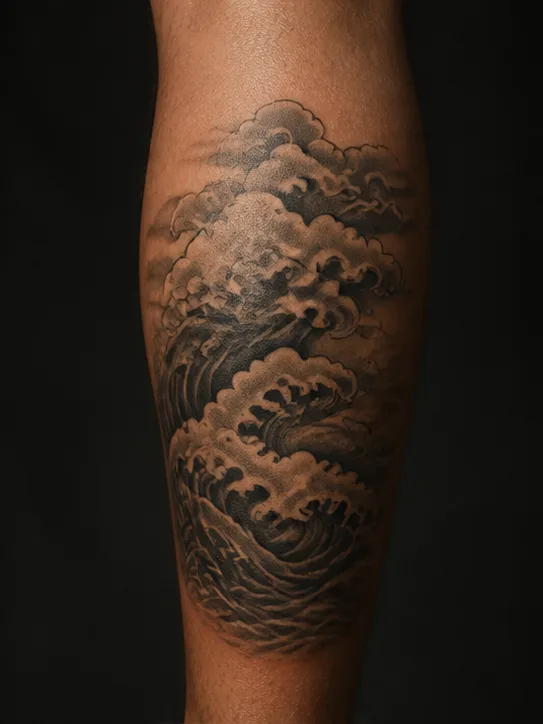
A second cover-up is not the same problem repeated. The artist must account for the first tattoo, the design used to hide it, and any places where those layers have blended or become raised. A flower placed over lettering may now be a large dark flower rather than a set of thin lines. Covering it again means designing around that new silhouette and value map.
A filled decision example
Use this fictional map to make the trade-off visible before a consultation: a dark curved band occupies the lower third, a mid-grey floral remnant sits above it, two small clear gaps remain at the sides, and the upper boundary is the largest area you will accept. The map is conceptual, not a healed result or an Ombra output.
- Route A — direct second cover: a large directional koi uses the dark band as scale and keeps the two side gaps open. Visual difference: the result stays close to the current footprint but needs the darkest values over the band. Personal boundary: no extension above the marked upper line. Ask the artist: which parts of the old silhouette remain readable from normal distance?
- Route B — redesign and extension: the floral remnant becomes a background mass around a larger heron. Visual difference: the subject reads more clearly, but the footprint crosses the original upper boundary. Personal boundary: this route is eliminated when the upper boundary is firm; technical possibility is not permission to expand. Ask the artist: can the same readable hierarchy be rebuilt inside the accepted boundary?
- Route C — selective fading first: fade the lower band before choosing a lighter botanical composition. Visual difference: more open skin and midtone options, with a longer timeline and treatment uncertainty. Personal boundary: pause if the provider cannot explain the likely response and recovery. Ask the artist and laser provider: what specific constraint would fading change?
Why every additional layer is harder
- There is less open skin available to create contrast and readable negative space.
- The darkest areas may already occupy the best focal positions.
- The first cover may extend beyond the original tattoo in several directions.
- Repeated tattooing can change texture or sensitivity in some areas.
- Your acceptable size and darkness may be smaller than the technical solution requires.
Take clear daylight photographs from straight on and from the sides if the piece wraps. Collect any older photographs that show the original tattoo and the first cover before it aged. That history helps an artist understand which shapes belong to which layer. Do not edit the current density or hide shine and texture with filters.
Three realistic routes
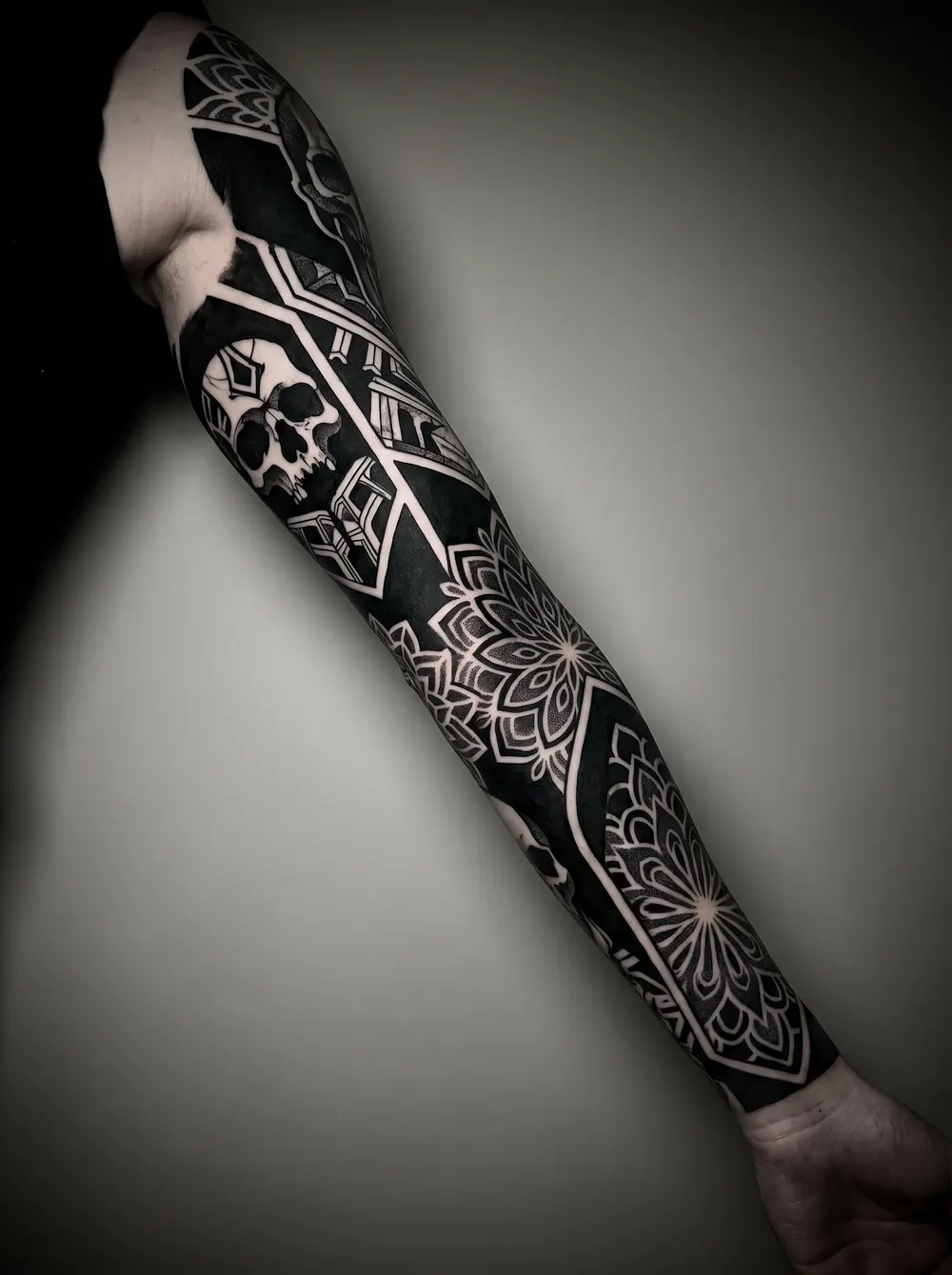
A direct second cover works best when the existing piece contains usable gaps, faded passages, or a silhouette that can become part of a larger subject. Japanese backgrounds, botanical masses, animals with directional texture, ornamental structures, and deliberate blackwork can provide broad shapes. The subject should arise from the old map; choosing something merely because it is dark often creates a muddy result.
A redesign or extension can be more useful than trying to bury every line. The artist may keep an acceptable focal element, correct its hierarchy, and build a sleeve or panel around it so the eye reads a coherent whole. This approach still requires honest agreement about which traces remain. It is not a promise that the earlier layers vanish.
Selective laser fading may reduce one stubborn block or edge enough to open lighter design choices. The goal can be partial reduction rather than total removal. Response, timing, cost, and risk vary. Ask the cover-up artist what specifically needs to change, then discuss suitability with a qualified laser provider. The two decisions should inform each other without either provider promising the other's result.
Know when to stop adding ink
If the only direct-cover proposal is substantially larger or darker than you want, pausing is a valid decision. Another rushed layer may narrow future options and turn a local problem into a full-limb commitment. Ask the artist to mark the minimum workable boundary and explain where clear skin is doing essential work. You should be able to consent to the actual footprint, not just the cropped concept image.
Compare a broader second-cover direction → Get the appReview healed examples of second covers when available, but do not expect an identical starting point. Look for readable silhouettes, controlled dark areas, consistent line spacing, and honest documentation of what remains. A responsible artist may decline the project, recommend fading, propose a different subject, or suggest leaving the current cover alone.
Plan the result at normal viewing distance and along the body's axis. Dense detail can disguise an old edge in a zoomed drawing while the previous shape remains obvious from across a room. Photograph paper mockups or digital previews at several sizes, then bring the unedited source and your firm size boundary to a specialist.
Ombra Tattoo is free to download and can help you compare broad second-cover compositions on your own image. Keep every preview separate from the factual record of the current tattoo. The final design must be original, body-specific, and technically rebuilt by an artist who has examined the skin in person.
FAQ
Can the same tattoo be covered more than twice?
There is no useful universal number. Each layer changes density, shape, skin, and available clear area, so an experienced artist must assess the actual piece.
Does a second cover-up have to be blackout?
No, but solid blackwork may be one route. Larger textured compositions, redesign, extension, or selective fading may also be possible.
Will laser remove only the first cover-up layer?
Laser does not neatly select a visual layer. A qualified provider must explain likely response and risk for the pigments and skin involved.
Should I return to the first cover-up artist?
You may ask them, but you can also seek a specialist second opinion. Compare healed work, the explanation of constraints, and whether the proposed footprint suits you.
Can an app confirm that a second cover will work?
No. An app can support visual comparison, but only an in-person specialist can inspect density, texture, scarring, and technical feasibility.
Related guides
Ombra Tattoo
Preview ink on your own skin