how to design a tattoo
Updated
The Ombra Tattoo team · Written by the Ombra product team — practical guidance for planning tattoo ideas, placement, and cover-up questions.
To design a tattoo, start with the idea you want it to carry, then narrow it into a motif, a style, a body placement, and a size that belong together. Write those choices down as a short brief, explore a few visual directions, and take the strongest direction to a tattoo artist for the final design. AI can help you compare ideas and preview scale on your own skin, but it is a planning reference rather than a tattoo-ready stencil.
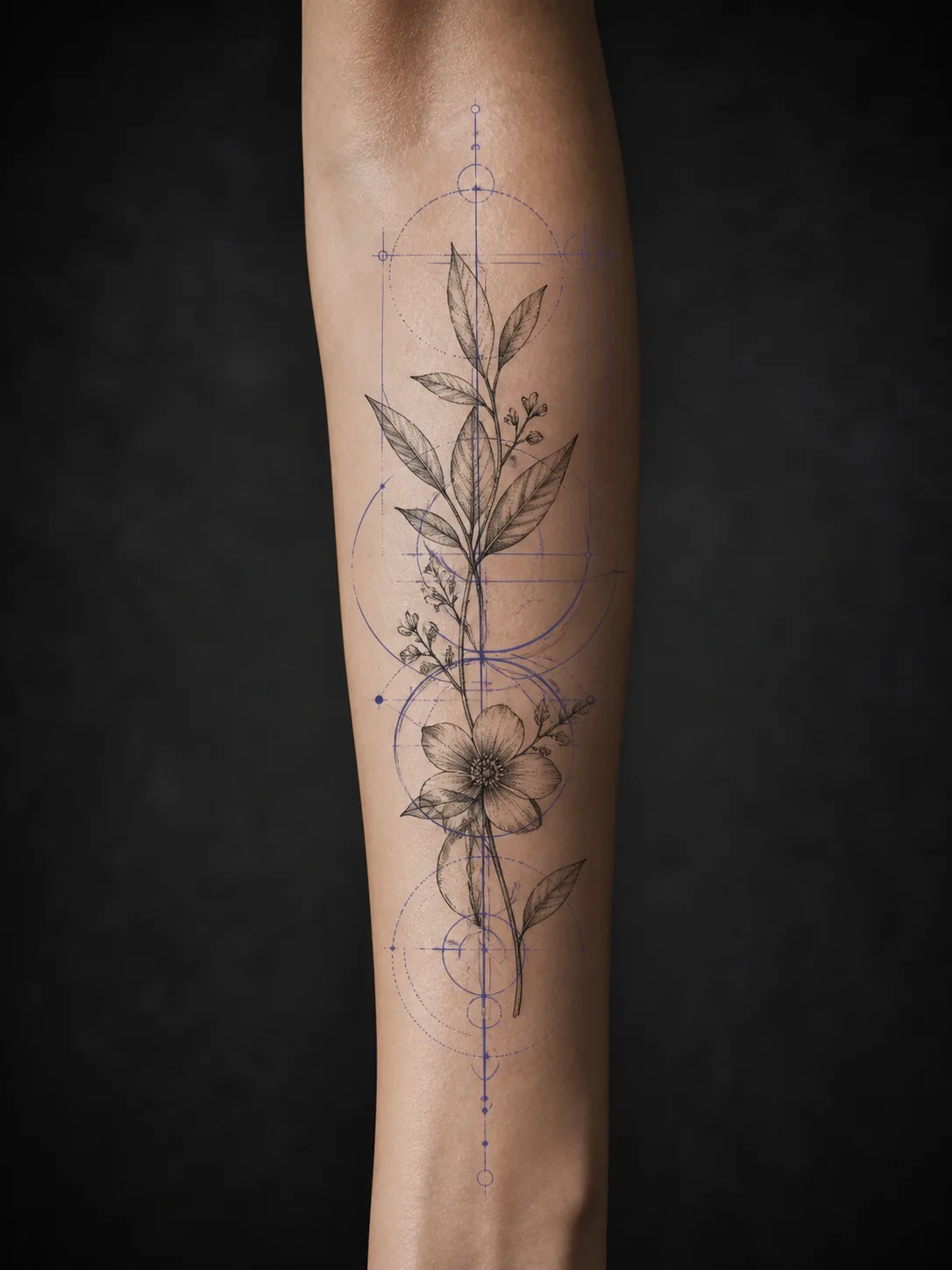
The best tattoo ideas are specific without being over-explained. You do not need to arrive at a studio with finished artwork, but you do need more than a mood board full of unrelated images. A useful starting point connects a subject you care about with a visual language and a place on your body. That gives an artist something they can shape into a design that looks intentional from across the room and still rewards a closer look.
Start with the meaning, then choose the image
Begin with the reason you want the tattoo, not a trend label. It might be a person, a place, a change you made, a belief, or simply an image you have loved for years. Next, look for a motif that can carry that idea without needing an explanation. A botanical stem can suggest growth; a map contour can hold a relationship to a place; an animal can bring movement, character, or protection. The goal is not to find a universal symbol. It is to find an image you will still recognize as yours after the novelty has passed.
Give yourself two or three motif options instead of locking onto the first literal answer. If the theme is travel, for example, compare a compass, a shoreline, and an insect whose movement feels right. Those options make it easier to see whether you are drawn to the subject itself, its shape, or the feeling it creates. That distinction matters when the artist starts simplifying the final composition.
Make style, placement, and size agree
A tattoo is not a flat illustration pasted onto a body. A long botanical piece can follow a forearm or calf; a compact emblem can sit comfortably on a shoulder or upper arm; a broad scene needs room to breathe on the back, thigh, or chest. Before falling in love with tiny detail, decide how visible you want the tattoo to be, what clothes may cover it, and whether the design needs to move with a joint. These practical limits are useful creative constraints, not compromises.
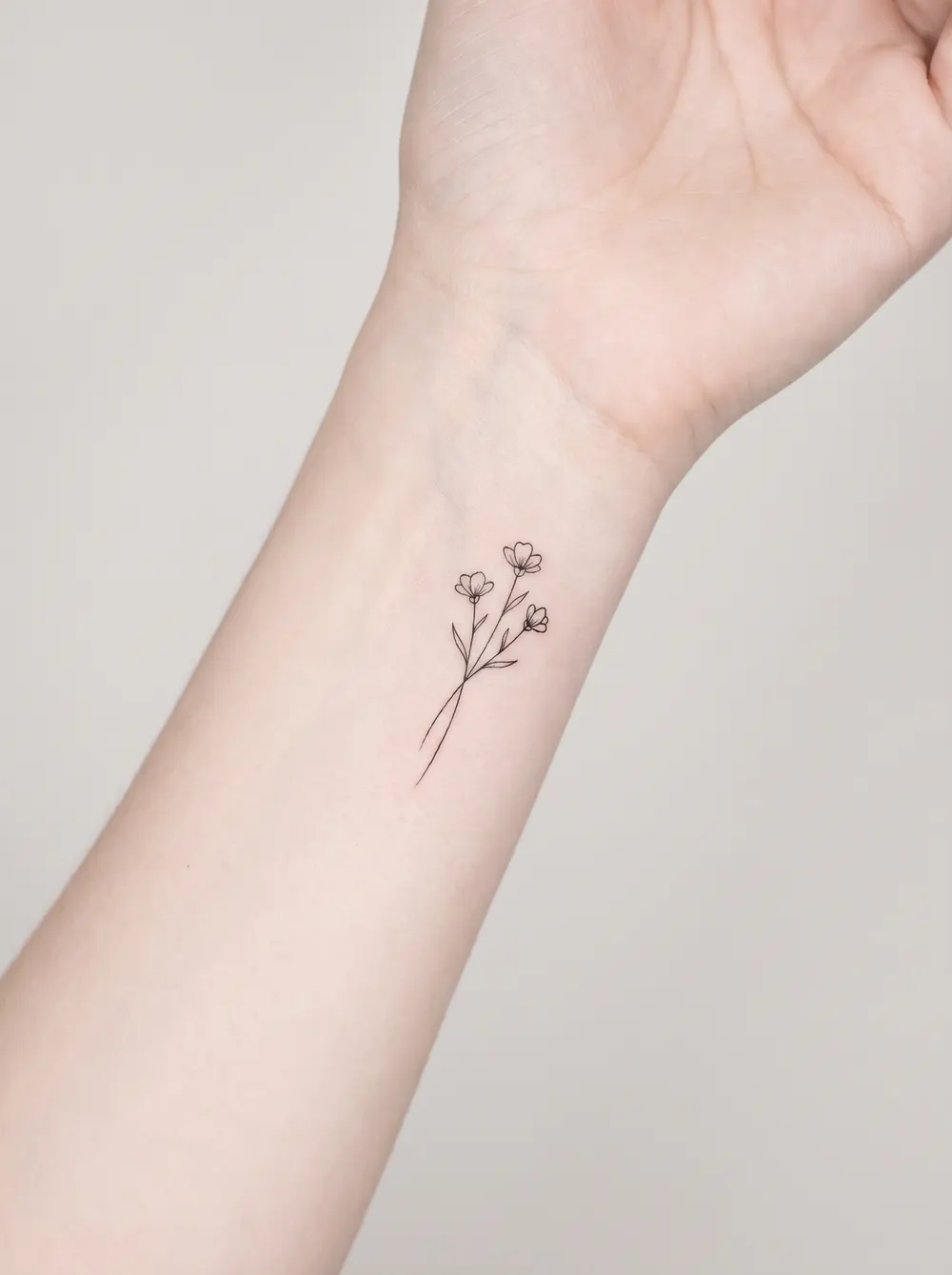
- Choose a style by its visual traits: fine line for light, delicate marks; blackwork for bolder contrast; illustrative work for a hand-drawn feel; or geometric work for measured structure.
- Match the motif to the shape of the area. Vertical subjects often suit limbs, while circular or wider compositions need a larger, flatter canvas.
- Decide what must stay readable from a normal viewing distance. If every small line is essential, the design may need more space or a simpler direction.
How to turn an idea into a tattoo brief
Write one sentence about the feeling or story
Use plain language. For example: “I want a calm reminder of the coast where I grew up,” or “I want an energetic animal design that feels protective.” This is the north star for every later choice.
Pick a primary motif and two visual references
Name the subject, then save references for line quality, shading, or composition rather than asking an artist to copy another tattoo. Note what you like in each reference: the open space, a loose leaf shape, heavy shadow, or a symmetrical layout.
Choose the placement and an approximate footprint
Say where it belongs and how much of that area it should occupy. “Inner forearm, following the length of the arm” is more useful than “medium-sized.” A photo of the area can help you judge the direction later.
Set style boundaries before exploring variations
Write what you want and what you do not want: fine-line botanical, black and grey, no lettering, no dense background, or a geometric frame only. Boundaries prevent a promising idea from drifting into a style that is impressive but not yours.
Compare a small set of directions
Use sketches, reference boards, or AI-generated concept images to test the same brief in a few compositions. Ask which version reads clearly, suits the body area, and still feels personal—not which image looks most finished on a screen.
Bring the brief to a suitable tattoo artist
Share the meaning, placement, style boundaries, and your favorite direction. A good artist will translate the brief into a custom composition for your skin, technical approach, and the way the tattoo needs to age.
Use AI to compare directions, not to skip the brief
Keep the roles separate
- AI preview: generates or compares visual directions from the brief; it may change anatomy, spacing, lettering, or old-ink boundaries.
- You: record what is meaningful, what is flexible, and which source facts must not be altered.
- Tattoo artist: redraws an original composition, adapts it to the real body and technique, and decides what can be tattooed.
AI is most helpful after you have made a few decisions. Instead of prompting “cool tattoo,” combine the parts of your brief: motif, style, placement, composition, and constraints. You might explore a fine-line wildflower with a vertical geometric frame, then compare it with a looser botanical version. The output can reveal that a motif is too busy, too literal, or much better when it follows the length of the forearm. That is useful progress even if you never use the image itself.
Ombra Tattoo is free to download, and its guided flows turn your idea, style, color, placement and size into design concepts; generation is credit-based. If the new piece has to cover an old tattoo, the cover-up flow can show a concept over a photo of that tattoo. Keep the version that communicates your brief most clearly, then bring it—and the notes behind it—to the artist who will make the final call.
Know when the design needs simplifying
A strong design does not need to include every symbol from the story. If the focal point is hard to name at a glance, remove one supporting element. If the smallest details only work when you zoom in, give them more room or replace them with a clearer shape. Simplifying is not losing meaning; it is choosing what the tattoo needs to say first. An artist may suggest that same edit after seeing the actual placement, which is exactly why the brief should describe priorities rather than dictate every line.
FAQ
How do I design a tattoo if I cannot draw?
You do not need to draw. Explain the meaning, choose a motif, collect references for the style you like, and decide on placement and size. That is enough to give a tattoo artist a useful brief for a custom design.
Can AI design a tattoo for me?
AI can help you explore and compare visual directions from a prompt. Use the results as planning references, then ask a tattoo artist to create the final, tattoo-ready design for your skin and placement.
What should I tell a tattoo artist before they design it?
Share the idea or meaning, preferred motif, placement, approximate size, style references, and any clear dislikes. Tell them which details are essential and which can change, so they have room to make the composition work.
How do I check placement before booking?
Hold a printed version of the design against the spot, or ask the artist to place a stencil, to compare scale, flow, and placement on your own body before you commit. It is not a guarantee of the finished tattoo, but it makes the conversation with your artist more concrete.
Related guides
Ombra Tattoo
AI cover-up and design concepts