Half-sleeve tattoo design ideas
Updated
The Ombra Tattoo team · Written by the Ombra product team — practical guidance for planning tattoo ideas, placement, and cover-up questions.
A half-sleeve tattoo design needs a boundary, a focal subject and a plan for the parts that wrap out of view. Start by choosing the upper arm or forearm, then decide whether you want one connected composition or several separate pieces. This guide is for planning permanent tattoo artwork, not buying temporary sleeve stickers or deciding how to cover existing ink.
Choose the boundary before collecting motifs
“Half sleeve” does not tell an artist exactly where your design ends. Mark your preferred start and stop on photographs of your own arm: shoulder toward elbow, or below elbow toward wrist. Ask the artist to confirm the boundary in person. State whether the design should stop on the outer face or continue around the arm; those requests use very different amounts of visual space.
Take front, back, inner and outer views with the same relaxed pose. Use a simple outline on a copy of each photo to mark the area you are considering. The drawings here explain composition choices, not body measurements. If your main concern is hiding existing ink, bring clear photos of it and start with an individual cover-up assessment.
Three composition directions to take to a consultation
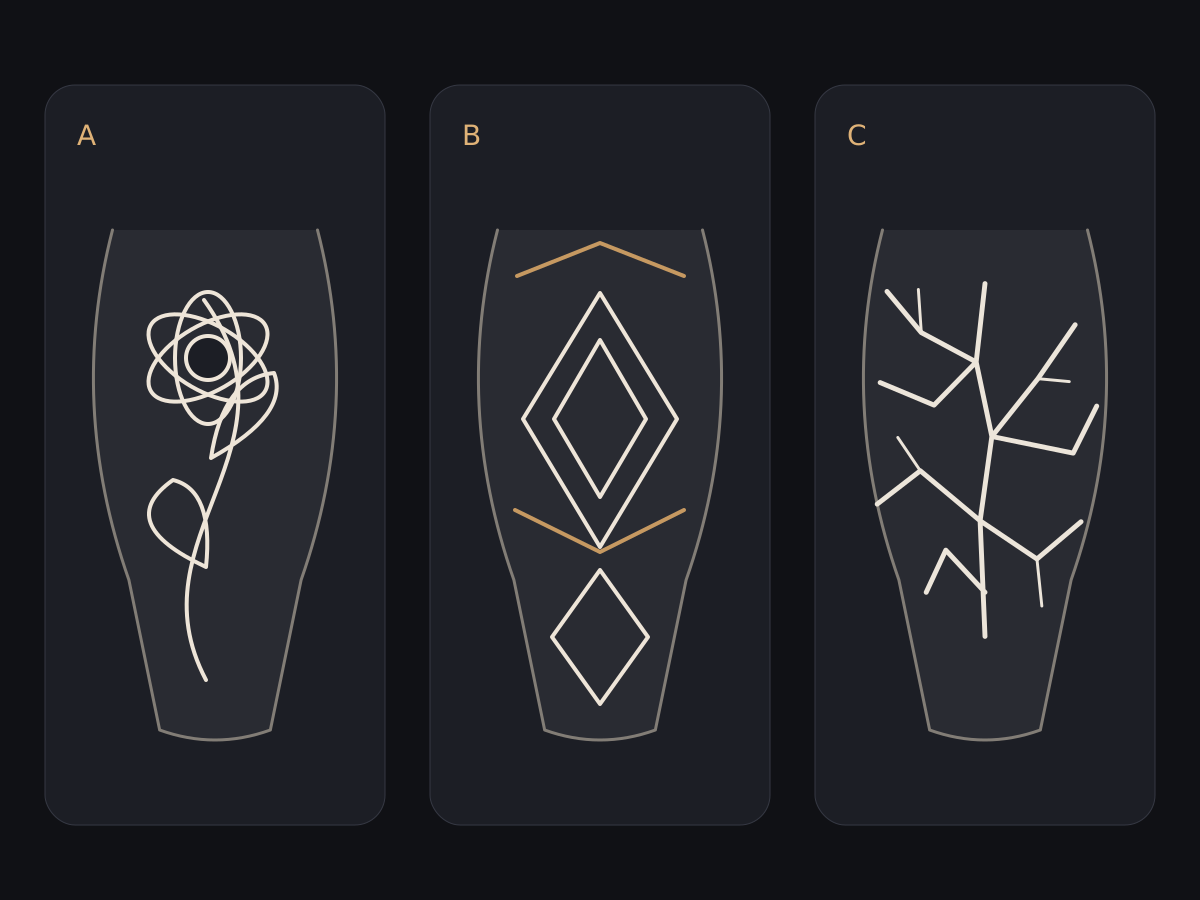
- A · Botanical: one large flower carries the main view; a stem connects two smaller leaf groups around the sides. Keep one side quieter instead of giving every flower equal weight. Decide whether the next section could continue along the stem.
- B · Geometric: one central shape anchors the front-facing view; repeated framing elements continue around it. Ask how the pattern will be redrawn where the arm changes shape. A flat repeated grid should not be assumed to wrap without adjustment.
- C · Branching ornament: a central structure sends selected tips around the arm while leaving open areas between them. Decide where the branches stop and which, if any, could become future connections.
Treat the three drawings as different planning problems. A asks which subject leads. B asks how rhythm continues around a changing surface. C asks where to stop the linework. Pick the problem you want to solve rather than combining every motif from all three.
Choose a finish that leaves a useful next step
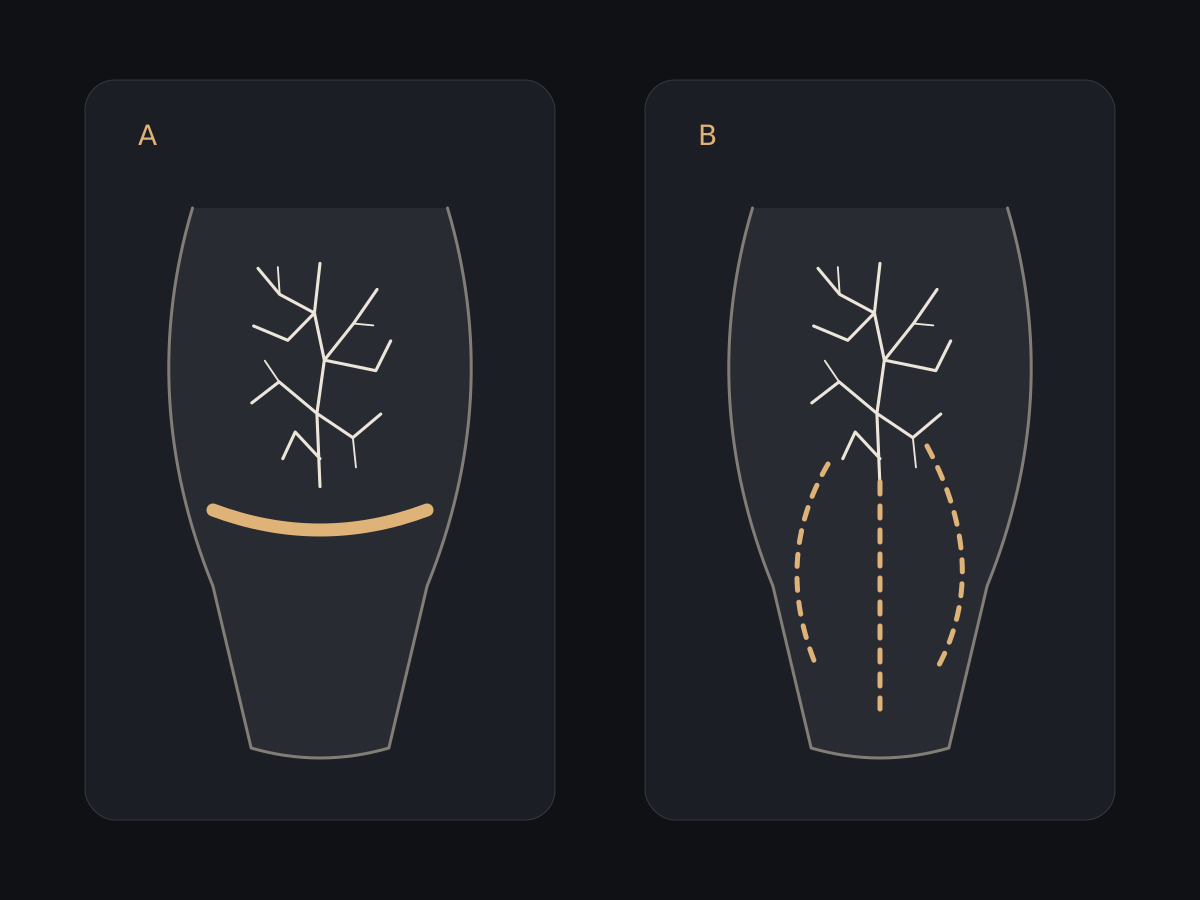
A closed edge can be a deliberate part of a half sleeve. If a full sleeve might follow, tell the artist before that edge is drawn. You might leave a quieter transition area or a motif that can continue, but there is no universal gap size that guarantees a future design will fit. Record what you want to preserve and let the artist solve the join.
Use Ombra Tattoo to develop the visual direction with a guided sequence of idea, style, color, placement and size choices. It can give you a concept to discuss; it does not measure your arm or construct a continuous, tattoo-ready wrap. The app is free to download, with generation access shown in the in-app offer.
Explore your idea in Ombra TattooFill out this example brief
- Area: outer upper arm, with the side views planned at the consultation.
- Main subject: one botanical flower; leaves support it rather than competing with it.
- Visual weight: a clear focal area and quieter connecting areas.
- Boundary: finish above the elbow, with the exact line agreed on the real arm.
- Future plan: possible forearm extension; do not lock in a heavy closed band without discussing the join.
- Artist decisions: final scale, redraw, spacing, side-view continuity and placement.
Check the whole arm before approving the drawing
Hold the brief next to each photograph. Does the main subject still lead from the angle people normally see? Is an element you care about disappearing around the side? If you bend the elbow or turn the wrist, which view changes? Mark questions on the photo instead of trying to solve anatomical fit by stretching an image yourself.
Bring one preferred direction, one alternative and the reason you chose each. For example: “A has the subject I want; C has the open areas I prefer.” That is more useful than a folder of unrelated sleeves with no indication of what should stay. Keep a separate list of things you do not want, such as text, a closed band or copying another person’s tattoo.
FAQ
Does a half sleeve have to cover the entire arm circumference?
People use the term differently. Tell your artist which views and boundaries you mean instead of relying on the label alone.
Should I choose the upper arm or forearm?
Choose the area whose visibility and shape suit your idea. Compare photos in your normal clothing and a relaxed pose, then agree the final placement with your artist.
Can I extend a half sleeve later?
An artist can assess extension options. Discuss that intention before the first design is finalized; a conceptual connection path is not a guarantee that any later motif will fit.
Is this a guide to temporary sleeve tattoos?
No. It explains planning choices for permanent tattoo artwork. Temporary sleeve stickers are outside this guide’s scope.
Related guides
Ombra Tattoo
AI cover-up and design concepts